
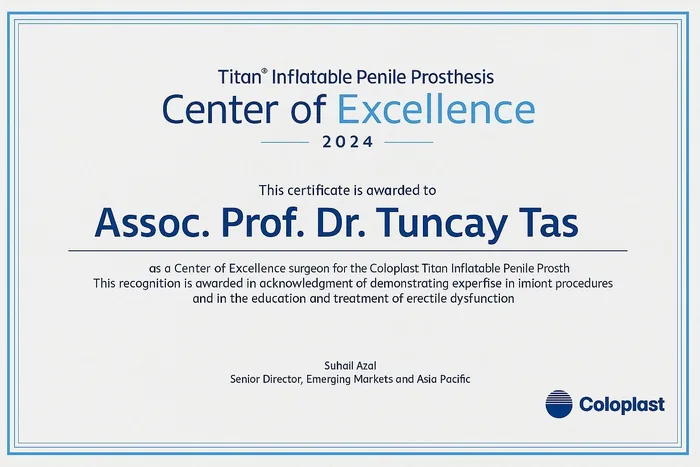
Medically reviewed by Assoc. Prof. Dr. Tuncay Taş
Dr. Tuncay Tas performs the full range of Peyronie’s disease and penile curvature treatments, from plication and plaque grafting through to penile implant with simultaneous straightening, for patients travelling from more than 60 countries. Istanbul combines surgical excellence with significantly lower costs than the US, UK or Europe, making it the destination of choice for men who want their curvature corrected by an experienced high-volume centre.
Free Consultation
Our team responds within one business day, personally and confidentially.
Penile curvature is an abnormal bend in the erect penis caused either by Peyronie’s disease, in which a fibrous plaque builds up inside the tunica albuginea (the elastic membrane that holds an erection rigid), or, less commonly, by a congenital condition present from birth.NIDDK · Urology Care Foundation Congenital curvature is rare, with European guidelines putting its incidence below 1%, and arises from disproportionate development of the corpora cavernosa rather than from plaque.EAU Guidelines
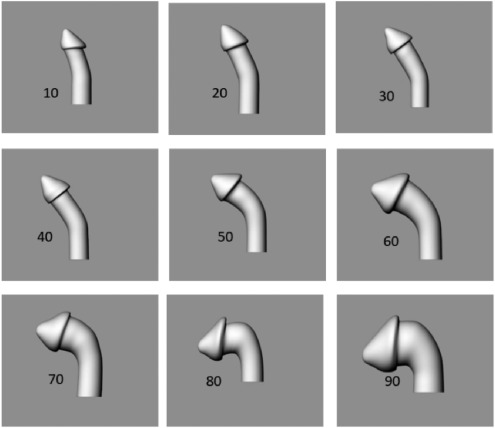
When the curvature exceeds roughly 30 degrees, it can interfere with sexual function, cause pain on erection, lead to erectile dysfunction and become a source of significant psychological distress.AUA Guideline Modern urology offers reliable treatment paths for each severity grade.
The treatment options for penile curvature available at our Istanbul clinic include:AUA Guideline · Cleveland Clinic
The right approach depends on the curvature angle, the presence of erectile dysfunction, plaque calcification and whether the disease is still active or has stabilised. European guidelines advise operating only once the disease is stable, meaning the pain has resolved and the curvature has stayed unchanged for at least three to six months.EAU Guidelines
Turkey has become one of the leading global destinations for Peyronie’s disease and penile curvature correction, not only because of cost advantages, but because of a unique combination of clinical experience, surgical volume and modern hospital infrastructure.
One of the most critical factors influencing the success of curvature surgery is operator experience. Penile plication, plaque grafting and implant straightening all reward repetition: angle measurement, plaque mapping and graft choice become faster and more accurate the more cases a surgeon has performed. Many Turkish centres operate as high-volume referral hubs, performing significantly more curvature corrections than the average urology unit in the US or Europe. The effect of volume is measurable: a national analysis of 14,969 penile prosthesis patients published in The Journal of Urology found that surgeons doing fewer than 31 cases a year had roughly twice the risk of reoperation for infection compared with the highest-volume implanters.J Urol Published reviews make the same point about plaque incision and grafting, which is described as technically demanding and best performed in high-volume centres.Arab J Urol This translates into:
Surgeries are performed in internationally accredited facilities, many of which meet Joint Commission International standards. JCI publishes a public register of every hospital it accredits worldwide, including those in Türkiye.JCI International patients receive a fully integrated medical tourism experience including:
Ultimately, choosing Turkey means accessing world-class curvature surgery with a system designed specifically for international patients, combining medical excellence with convenience and significant savings.
All-inclusive package prices at Dr. Tas Clinic compared to average costs in the US, UK and Europe for the same procedures and techniques. The relative ordering will look familiar: comparative cost-effectiveness work in The Journal of Sexual Medicine found collagenase injection therapy to be significantly more expensive than any surgical option, with penile plication the least costly of the active treatments.J Sex Med
| Treatment | Dr. Tuncay Taş Istanbul, Turkey | United States | United Kingdom | Europe |
|---|---|---|---|---|
| Penile Plication Nesbit / Yachia technique | $4,000 – $6,000 | $15,000 – $22,000 | £10,000 – £14,000 | €11,000 – €16,000 |
| Plaque Incision + Grafting Lue procedure | $7,000 – $10,000 | $22,000 – $30,000 | £14,000 – £18,000 | €16,000 – €22,000 |
| Penile Implant + Straightening 3-piece inflatable, AMS / Coloplast | $10,000 – $13,000 | $30,000 – $38,000 | £20,000 – £24,000 | €22,000 – €28,000 |
| Xiaflex (CCH) Injection Cycle 4 injections, 8 treatments | $1,500 – $3,000 | $30,000 – $40,000 | £15,000 – £20,000 | €18,000 – €22,000 |
| Shock Wave (Li-ESWT) 6-session course | $1,000 – $2,000 | $4,000 – $6,000 | £2,500 – £4,000 | €3,000 – €5,000 |
Visual evidence of curvature correction from real patients of Dr. Tas. Hover or tap to view each image, click to enlarge. See the full penile curvature before after gallery for additional cases.
All clinical photographs are shared with full patient consent.
Dr. Tas offers every major Peyronie’s disease and curvature treatment, selecting the optimal approach based on your curvature angle, plaque characteristics, erectile function and personal goals.
The Most Common Surgery for Mild to Moderate Curvature
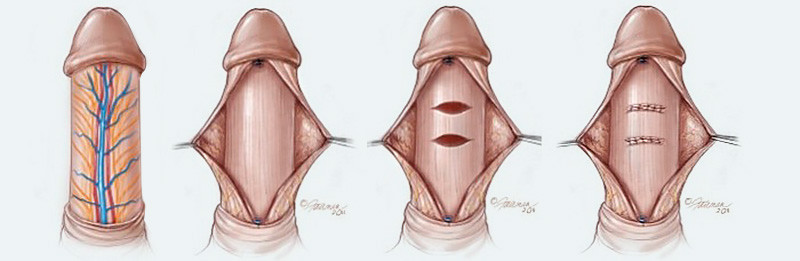
Penile plication is the most widely performed surgery for Peyronie’s disease and congenital curvature when the bend is between 30 and 60 degrees and erectile function is preserved. Both the American and European urology guidelines recommend the Nesbit / Yachia plication techniques for uniplanar curvature of this severity in men with adequate erections.AUA Guideline · EAU Guidelines
The technique works by shortening the tunica albuginea on the side opposite to the curvature, which counter-balances the plaque and produces a straight erection.
Through a small incision, the surgeon places either non-absorbable sutures (Nesbit) or makes longitudinal incisions closed transversely (Yachia) on the convex side of the penis. An intra-operative artificial erection confirms the correction before closing.
Across the published plication series, successful straightening is reported in 85 to 99 percent of patients, with satisfaction rates of 62 to 96 percent.Arab J Urol
Plication shortens the longer side of the penis; some degree of perceived shortening is reported by a substantial proportion of patients in the literature, and for a 45-degree curve this typically amounts to 0.5 to 2 cm.Arab J Urol · Adv Urol The technique is best suited to men whose curvature is stable and whose pre-operative length is adequate.
Length-Preserving Correction for Severe Curvature
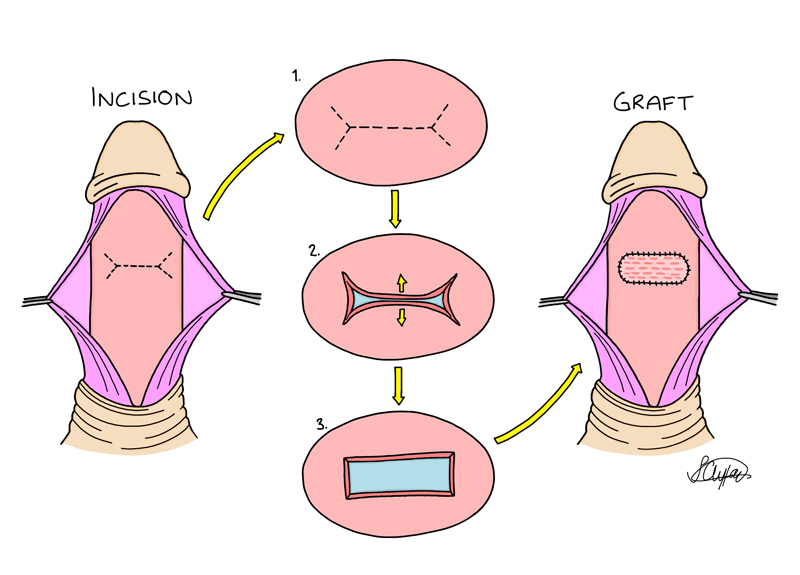
When the curvature exceeds 60 degrees, when the deformity is complex (hourglass, hinge, multi-plane) or when preservation of length is critical, the plaque incision and grafting technique is the recommended approach. This is exactly the split used in the published treatment algorithms: plication for uniplanar curves under 60 degrees, incision and grafting for curves above 60 to 70 degrees or with destabilising features. The EAU makes the same recommendation for men with normal erectile function who cannot afford to lose length.Arab J Urol · EAU Guidelines
The plaque is exposed through a degloving incision and either incised in an “H” or geometric pattern, or partially excised. The resulting tunical defect is then closed with a graft (commonly bovine pericardium, porcine intestinal submucosa, or autologous tissue), restoring tunical continuity without shortening the corpora. No single incision pattern or graft material has been shown to be superior in the published comparisons.Arab J Urol
Straightening success across the graft materials studied ranges from 74 to 100 percent.Arab J Urol
The Lue technique is technically demanding and is best performed by surgeons who do a high volume of cases. Published series report new-onset erectile dysfunction in 0 to 15 percent of men after grafting, a higher risk than with plication, which is why patients with already-borderline erections may be steered towards penile implant with simultaneous straightening instead.Arab J Urol · Adv Urol For this reason grafting is generally reserved for men whose baseline erections are good.
The Definitive Solution When Curvature and ED Coexist
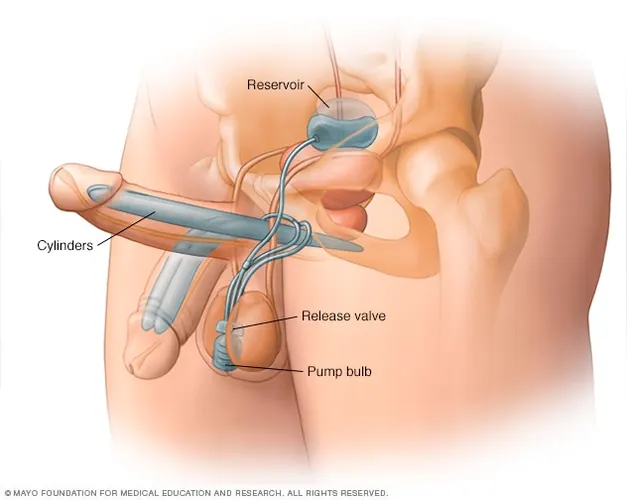
When Peyronie’s disease has caused both penile curvature and erectile dysfunction, the single most reliable treatment is implantation of a three-piece inflatable penile prosthesis combined with intra-operative straightening of the corpora. Both the AUA and the EAU recommend prosthesis implantation, with or without additional straightening manoeuvres, for men whose erectile dysfunction no longer responds to medication.AUA Guideline · EAU Guidelines
After implant placement, the inflated prosthesis is used to assess residual curvature. Mild to moderate residual curves are corrected by manual modelling against the inflated cylinders; significant residual curves are corrected by plication or, if needed, plaque incision and grafting performed over the implant. Using this stepwise approach, only 0 to 5 percent of patients are left with a residual curve greater than 20 to 30 degrees, and reported satisfaction runs at 79 to 96 percent for patients and 75 to 77 percent for partners.Arab J Urol
This pathway commits the patient to a lifetime with a penile prosthesis. It is the appropriate choice when erectile dysfunction is already significant or when other treatments have failed.
Conservative Pathways for Active and Early-Stage Disease
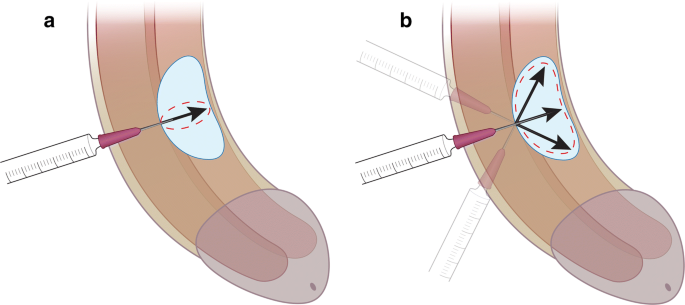
Not every patient with penile curvature needs surgery. For men in the early or active phase of Peyronie’s disease, or for those preferring a less invasive route, several conservative options are available.
Xiaflex is the only injectable approved by the FDA for Peyronie’s disease; a full course runs to four treatment cycles, each consisting of two injections followed by a penile modelling procedure.FDA label (PDF) The collagenase enzyme dissolves the collagen fibres of the plaque. In the pivotal IMPRESS I and II trials, treated men gained a mean 34 percent improvement in curvature, an average of about 17 degrees, against 18 percent on placebo.J Urol (IMPRESS) Both the AUA and EAU restrict the indication to stable disease with a dorsal or lateral curve between 30 and 90 degrees and intact erectile function.AUA Guideline · EAU Guidelines
Focused acoustic waves are applied directly to the plaque to soften calcification and reduce penile pain. We use it for pain, not for straightening: the AUA and EAU both advise against shock wave therapy as a means of reducing curvature or plaque size, while the AUA does allow it to be offered for penile pain.AUA Guideline · EAU Guidelines
Mechanical traction devices apply a sustained stretching force across the curvature. In a randomised controlled trial of 110 men published in The Journal of Urology, three months of daily traction produced a mean curvature improvement of 11.7 degrees and a 1.5 cm gain in penile length against no change in the control group.J Urol European guidelines therefore support offering traction devices, while noting that the overall outcome data remain limited.EAU Guidelines Traction is often combined with Xiaflex.
Conservative treatments take months to show effect and are best suited to mild curvature or to patients who are not surgical candidates. When the curvature is severe or interferes with intercourse, surgery remains the most reliable option.
From the moment you land to the day you fly home, every step of your penile curvature treatment is planned and supported by our international patient team.
You are met at the airport by our patient coordinator and transferred to your hotel. After settling in, you attend a pre-operative consultation with Dr. Tas. Your curvature is measured both clinically and photographically; an ultrasound is performed to map the plaque and assess penile blood flow. Routine blood tests and an ECG are completed at the clinic.
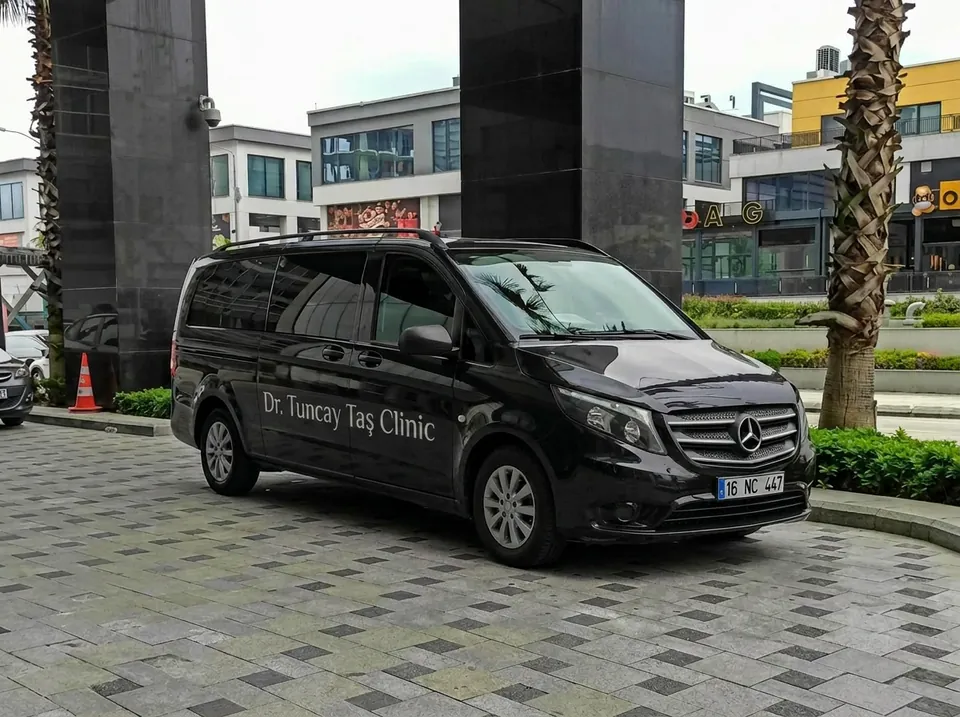
You are transferred to the hospital early in the morning. The curvature correction is performed under general or spinal anaesthesia. Penile plication takes around 60 minutes; plaque incision and grafting 90 to 120 minutes; combined implant and straightening 90 to 120 minutes. After a short recovery period you are moved to your private room. Discomfort is mild and well controlled with prescribed medication.
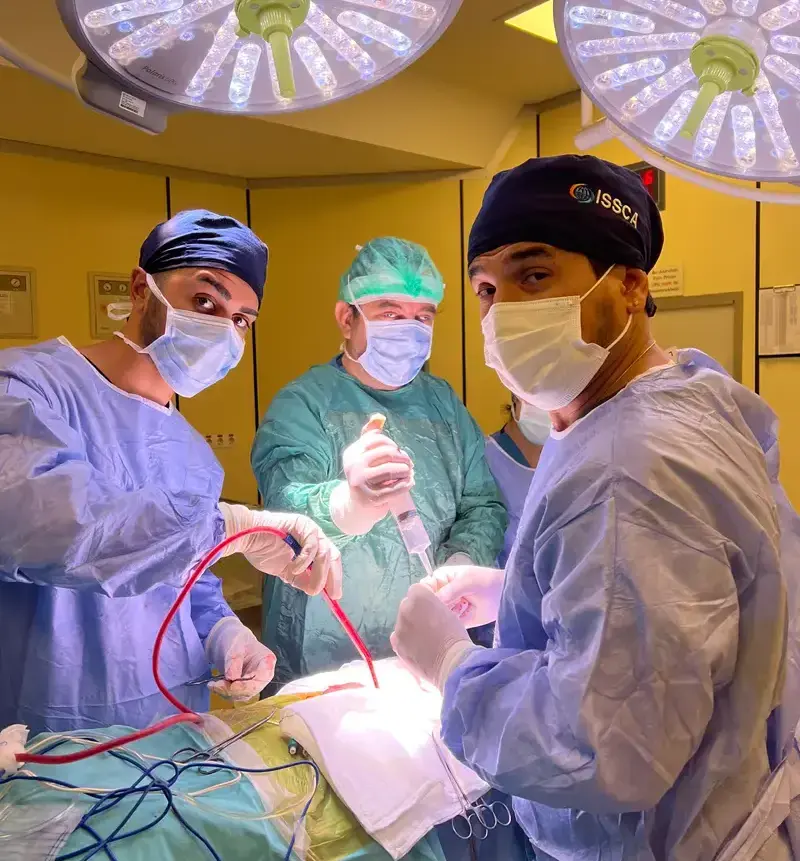
Dr. Tas visits you in the morning for a post-operative review and inspects the wound. Once cleared, you are discharged and transferred back to your hotel. A detailed aftercare plan is provided covering wound care, antibiotic schedule, swelling management and activity restrictions. Our coordinator remains in contact throughout the day.

This day is dedicated to rest at the hotel. Light walking supports circulation and reduces swelling. Our medical team is reachable by phone or WhatsApp for any questions or concerns. Most patients find penile bruising and oedema are already noticeably improving by this stage.

You return to the clinic for a follow-up appointment. Dr. Tas or a senior member of the surgical team inspects the wound, removes any dressings and confirms healing is progressing as expected. For patients who had penile implant surgery, the device is briefly cycled to verify function. A medical clearance letter is provided for those flying home.
For patients who prefer an additional day of rest before flying, Day 6 offers the opportunity to recover further in Istanbul. Light sightseeing or a short walk along the Bosphorus is possible for those feeling well. Our team remains available for any last-minute concerns and can assist with transport or pharmacy needs.
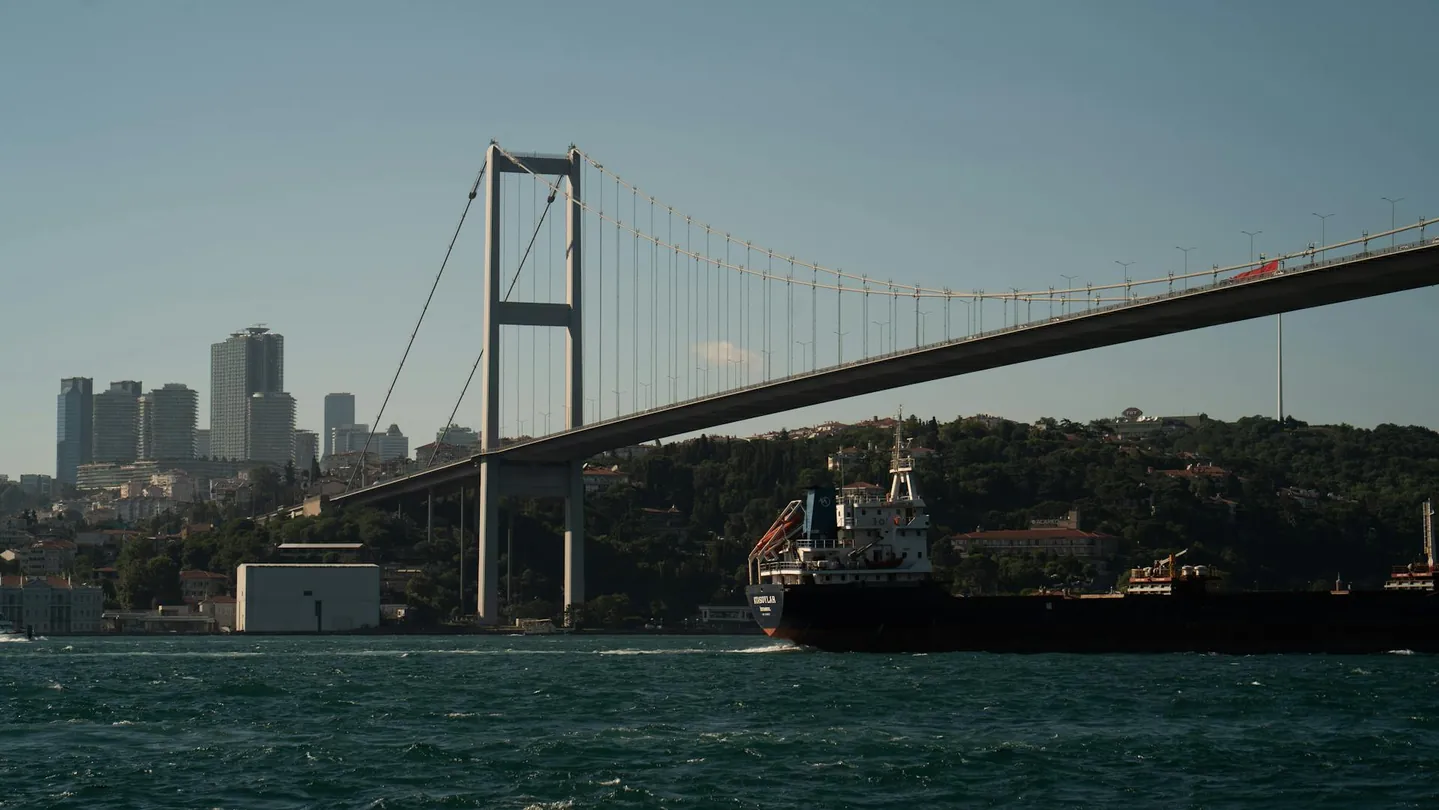
Our driver transfers you to the airport for your return flight. Before departure, you receive a complete medical summary, digital copies of all test results and a structured follow-up schedule covering wound care, the resumption of intercourse at six to eight weeks, and (where relevant) implant activation training at six weeks. Remote video consultations with Dr. Tas are available in the weeks following your return.
The right curvature treatment depends on several factors that Dr. Tas will assess at your consultation:
An experienced prosthetic urologist evaluates these factors to recommend the most appropriate treatment, from non-surgical options through to combined implant and straightening surgery. Guideline bodies stress that this should be a shared decision reached only after the benefits, risks and realistic post-operative expectations have been discussed in detail.AUA Guideline · Urology Care Foundation
Penile curvature surgery has become one of the most reliable procedures in reconstructive urology.
With modern techniques and high-volume experience, satisfaction in the published series reaches up to 96 percent: 62 to 96 percent after plication and 79 to 96 percent after prosthesis-based correction, with successful straightening in 85 to 99 percent of plication cases and 74 to 100 percent of grafting cases.Arab J Urol
Today, men with Peyronie’s disease can regain straight erections, restore intimacy and return to a full sexual life within weeks of surgery.NIDDK
Hospitals in Turkey operate with lower staffing, infrastructure, and administrative costs compared to the US.
The exchange rate between major currencies (USD/GBP/EUR) and the Turkish Lira makes high-quality curvature surgery more accessible to international patients.
Türkiye actively supports medical tourism through the Ministry of Health, which authorises and audits every facility treating international patients under its International Health Tourism regulation.Ministry of Health
Clinics performing a large number of procedures benefit from economies of scale, reducing per-surgery costs without affecting quality.
Importantly, the same globally recognised surgical techniques, graft materials and FDA-approved implants are used: the Nesbit, Yachia and Lue procedures recommended by the American and European urology guidelines, and inflatable prostheses regulated by the FDA as Class III devices requiring full premarket approval.EAU Guidelines · FDA Patients receive equivalent medical care at a significantly reduced price.
Penile curvature is an abnormal bend in the erect penis. It is most commonly caused by Peyronie’s disease, a wound-healing disorder in which a fibrous plaque forms in the tunica albuginea, restricting expansion on one side of the penis during erection. It is thought to affect roughly 4 in 100 men aged 40 to 70, and is most often triggered by minor injury to the penis.Urology Care Foundation · Mayo Clinic
Peyronie’s disease typically develops in two phases. In the acute phase, which can last up to 18 months, the plaque is forming, pain is common and the curvature is still changing. The chronic phase begins around 12 to 18 months after symptoms start; the plaque stabilises and the curvature stops progressing.NIDDK
A smaller group of men have congenital penile curvature, present from birth, due to disproportionate development of the corpora cavernosa rather than plaque formation. It is uncommon, with an incidence below 1%, and is not associated with any urethral abnormality.EAU Guidelines
Yes. Penile curvature surgery in Turkey is performed to the same clinical standards as in Western countries. Dr. Tas Clinic uses FDA-approved implant devices, validated graft materials and the same surgical techniques (Nesbit, Yachia, Lue) that the American and European urology guidelines recommend.AUA Guideline · EAU Guidelines
Procedures are carried out in internationally accredited hospitals operating under strict surgical safety protocols.JCI · Ministry of Health Dr. Tas performs more than 400 penile procedures annually, a volume that published outcome data associate with significantly lower infection and reoperation rates.J Urol
Patients from more than 60 countries have undergone curvature correction at our clinic. The same anaesthesia standards and post-operative care pathways used in major Western centres are applied here, at significantly lower total cost.
Each surgical pathway has a different length profile:
Penile plication (Nesbit / Yachia) shortens the longer side of the penis to match the shorter side. For a 45-degree curve this typically means 0.5 to 2 cm of perceived shortening, and shortening is the technique’s main documented drawback.Adv Urol
Plaque incision and grafting (Lue procedure) is designed to preserve length and can recover indentation volume from hourglass deformities. It preserves length considerably better than plication, and European guidelines specifically recommend it for men who cannot afford to lose length.Arab J Urol · EAU Guidelines
Penile implant with straightening preserves and can modestly extend length, particularly when the implant is sized to maximally fill the corpora.
Dr. Tas will discuss the expected length outcome for your specific curvature angle and anatomy at consultation.
The timeline depends on the procedure. For plication and grafting, sexual activity can resume around 6 weeks post-operatively once wound healing is complete. For penile implant with straightening, intercourse is permitted at 6 to 8 weeks after implant activation training. Non-surgical treatments (Xiaflex, traction, shock wave) do not impose a recovery period.
We offer the full range of internationally accepted treatments:
Penile plication: Nesbit and Yachia techniques for curves between 30 and 60 degrees with preserved erections.
Plaque incision and grafting (Lue procedure): for severe curvature, complex deformities and when length preservation is critical.
Penile implant with simultaneous straightening: for patients with Peyronie’s disease combined with erectile dysfunction, using AMS 700, Coloplast Titan or Rigicon Infla10 prostheses.
Xiaflex (Collagenase) injection therapy: the only injectable approved by the FDA for Peyronie’s disease.FDA label (PDF)
Low-intensity shock wave therapy (Li-ESWT) for penile pain, and penile traction therapy for conservative management of curvature and length.AUA Guideline · Wikipedia
All-inclusive package prices at Dr. Tas Clinic start from $4,000 for penile plication and rise to around $13,000 for penile implant with simultaneous straightening, significantly lower than equivalent surgery in the US, UK or Europe. Non-surgical options such as Xiaflex injection cycles and shock wave therapy are also offered at a fraction of Western prices, which is notable given that collagenase therapy is the single most expensive Peyronie’s treatment in US health-economics analyses.J Sex Med See the price comparison table above for a full breakdown.
 Medically reviewed by Assoc. Prof. Dr. Tuncay Taş
