
Medically reviewed by Assoc. Prof. Dr. Tuncay Taş
Male factors are involved in roughly half of all cases of couple infertility, and most of them have a name, a test and a treatment. Assoc. Prof. Dr. Tuncay Taş provides a complete andrology pathway in Istanbul — from semen analysis and hormonal work-up through microsurgical varicocele repair and surgical sperm retrieval (TESE, micro-TESE, MESA) — coordinated with ICSI/IVF where assisted reproduction is needed.
Free Consultation
Our team responds within one business day, personally and confidentially.
Male infertility is not a single diagnosis. It is a label applied whenever semen analysis or examination finds a problem with sperm count, movement or shape, the delivery pathway between the testicle and the ejaculate, or the hormonal signal driving sperm production. Couples are generally investigated after twelve months of regular unprotected intercourse without conception, and current guidance recommends assessing both partners together rather than testing the woman first.
Where an ejaculatory or erectile problem is the primary barrier to conception rather than sperm quality itself, that is addressed separately under erectile dysfunction treatment or premature ejaculation treatment.
A proper work-up starts with a detailed history and a physical examination, then follows a defined testing sequence rather than jumping straight to treatment.
Male infertility is investigated and treated according to findings, not guesswork. These are the figures that set expectations before treatment starts.
Share of infertility cases in which a male factor is present, alone or combined with a female factor.
AUA/ASRM Guideline
Proportion of men with abnormal semen parameters found to have a varicocele on examination, the single most common correctable finding.
EAU Guidelines
Typical sperm retrieval rate with micro-TESE in men with non-obstructive azoospermia, where sperm production itself is impaired.
Published andrology series
Typical span of the diagnostic work-up, since semen analysis is repeated after an interval to confirm the initial result.
WHO Laboratory Manual, 6th ed.
Diagnosis always precedes treatment. A varicocele found on examination without abnormal semen parameters is not, by itself, a reason for surgery.
Answer five short questions. This is not a diagnosis — it is a guide to whether baseline testing is worth doing now rather than later.
Quick Check
0 of 5 answered
Your Result
This quick check is educational only and does not replace a medical evaluation.
Treatment is matched to the cause found on work-up, and several of these approaches are commonly combined in the same treatment plan.
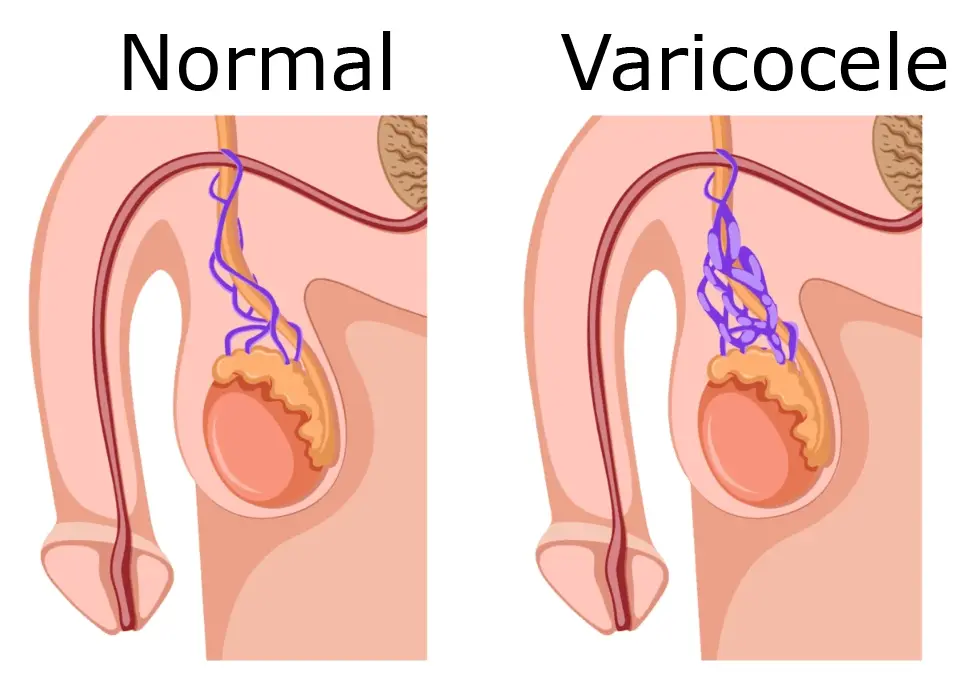
The Most Frequently Performed Surgical Treatment for Male Infertility
A magnified microsurgical approach through a small subinguinal incision ties off the abnormal veins while preserving the testicular artery and lymphatics, done as day surgery under general or spinal anaesthetic.
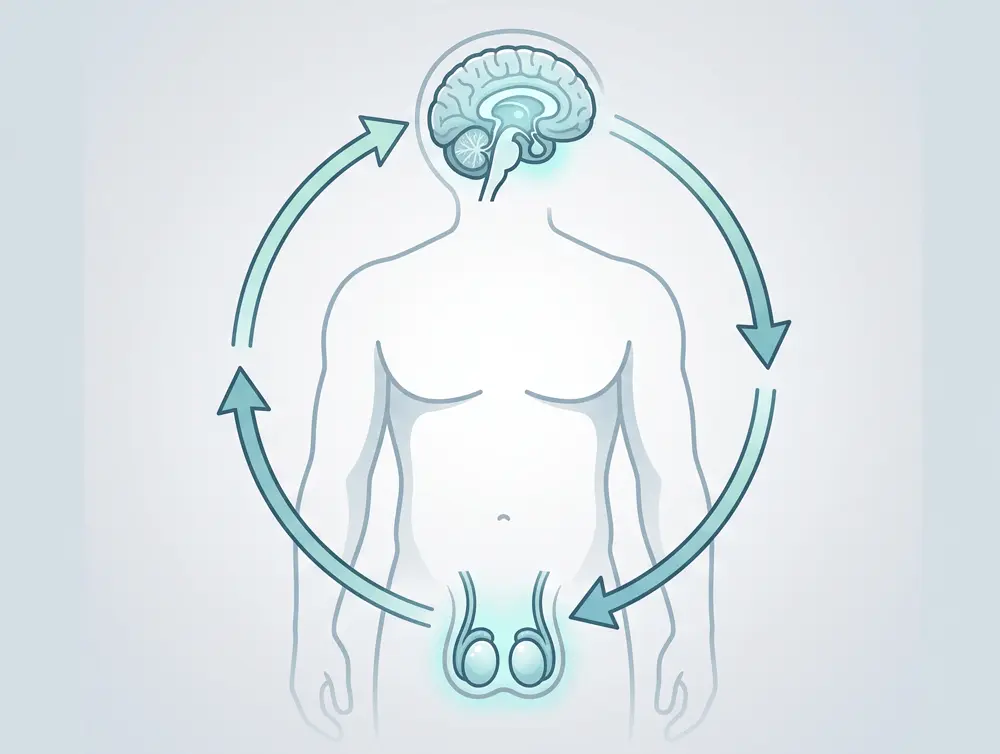
Treating the Hormonal Axis Directly Rather Than Bypassing It
Where the work-up finds a hormonal cause, such as hypogonadotropic hypogonadism or a pituitary problem, treatment targets that axis directly. Clomiphene citrate, gonadotropin injections (hCG/hMG) or aromatase inhibitors are used depending on the specific pattern found on blood testing.
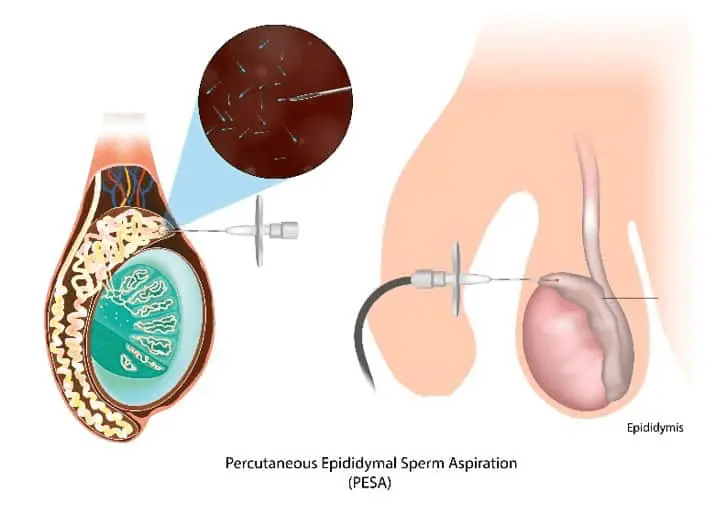
For Azoospermia, Sperm Can Often Still Be Retrieved Directly
For men with no sperm in the ejaculate, sperm can often still be retrieved directly from the testicle or epididymis for use in ICSI:
Retrieved sperm can be used fresh or frozen for a later ICSI cycle.
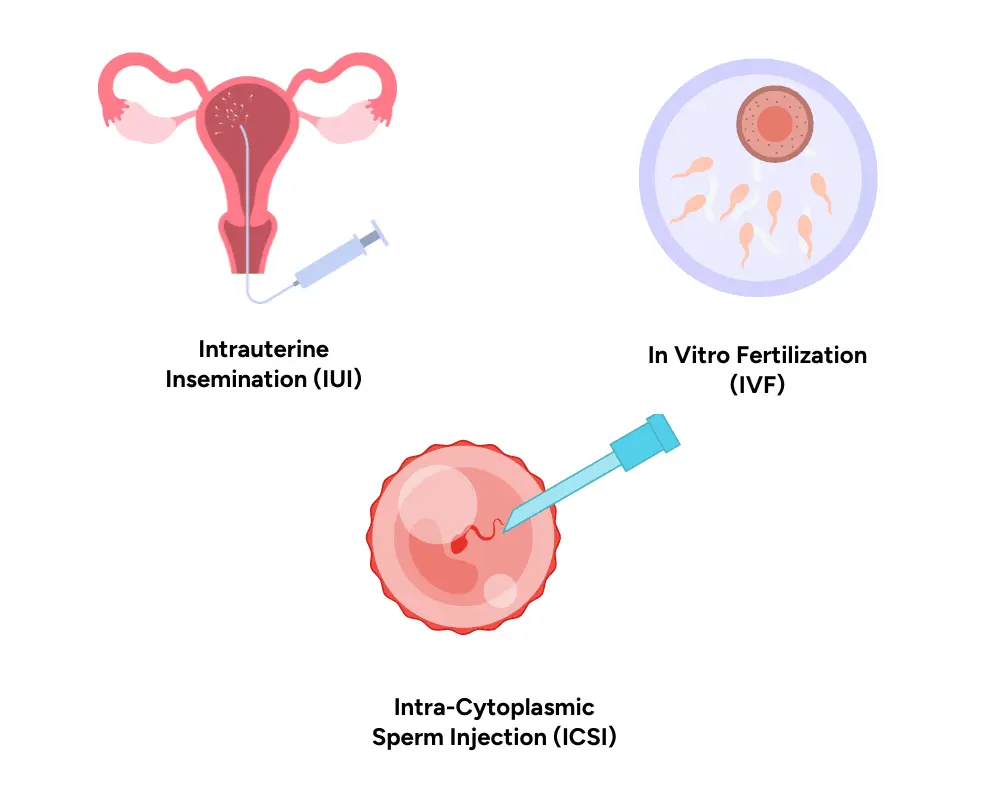
Coordinated With Your Fertility Clinic Where Assisted Reproduction Is Needed
Where sperm counts or motility are reduced but sperm are present in the ejaculate, intrauterine insemination (IUI) is often tried first. When counts are lower or IUI has failed, IVF with intracytoplasmic sperm injection (ICSI) is the standard next step, injecting a single selected sperm directly into an egg.
Andrology diagnostics and microsurgery reward volume and experience. Istanbul combines both, alongside a cost structure that puts full investigation and treatment within reach for men paying privately.
Many men are never properly investigated before being told IVF is the only option. Assoc. Prof. Dr. Tuncay Taş provides a full andrology pathway in Istanbul — diagnosis, microsurgery and surgical sperm retrieval — coordinated with your partner's fertility clinic rather than treated in isolation.
Where an ejaculatory or erectile problem is the primary barrier to conception, that is assessed and treated as such under erectile dysfunction treatment rather than folded into the same plan.
All-inclusive prices at Dr. Tas Clinic versus typical private fees in the US and UK. Figures are gathered from publicly available clinic pricing and medical tourism sources and are illustrative only; your exact cost is confirmed after consultation and diagnostic work-up.
| Procedure | Dr. Tuncay Taş Istanbul, Turkey | United Kingdom | United States |
|---|---|---|---|
| Varicocele Repair Microsurgical varicocelectomy | $2,000 to $3,500 | £4,000 to £6,500 | $6,000 to $12,000 |
| TESE Testicular sperm extraction | $2,000 to $3,000 | £3,200 to £4,800 | $5,000 to $8,000 |
| Micro-TESE Microsurgical sperm retrieval | $2,500 to $4,500 | £4,800 to £8,000 | $8,000 to $15,000 |
| MESA Microsurgical epididymal aspiration | $2,200 to $3,800 | £4,000 to £6,000 | $6,500 to $10,000 |
| IVF with ICSI Per cycle, sperm injection | $3,000 to $4,500 | £5,500 to £8,000 | $15,000 to $25,000 |
Yes, in a meaningful subset of cases. Varicocele repair, hormonal therapy for a diagnosed hormonal cause, and treating an underlying infection can restore natural fertility without any assisted reproduction. Whether this route is realistic depends entirely on what the diagnostic work-up finds, which is why testing comes before any treatment decision.
TESE is a direct testicular biopsy, effective when sperm production is normal and the problem is a blockage. Micro-TESE uses an operating microscope to search out the specific tubules most likely to contain sperm, which meaningfully improves retrieval odds in non-obstructive azoospermia, where sperm production itself is impaired, while removing less testicular tissue than a blind biopsy.
No. Azoospermia is a finding, not a single diagnosis, and the underlying cause determines what can be done. Obstructive azoospermia often allows sperm retrieval with a very high success rate since production is normal. Non-obstructive azoospermia has a lower but still meaningful retrieval rate with micro-TESE. A small proportion of men are found to have no retrievable sperm at all, which is why genetic and hormonal testing is done before retrieval is attempted, not after.
Diagnostic testing typically spans four to six weeks, since semen analysis is repeated after an interval to confirm the initial result. Varicocele repair and sperm retrieval procedures are day cases with most men back at desk work within a week. Where retrieval is coordinated with a partner's IVF/ICSI cycle, the full IVF timeline runs longer and is managed jointly with the fertility clinic.
No. Many men have a varicocele with entirely normal semen parameters and no fertility problem, and these are not treated. Surgery is generally reserved for a palpable varicocele found together with abnormal semen parameters, infertility of at least a year's duration, and a partner who is either fertile or has a treatable fertility issue of her own.
 Medically reviewed by Assoc. Prof. Dr. Tuncay Taş