
Medically reviewed by Assoc. Prof. Dr. Tuncay Taş
A vasectomy is designed to be permanent, but it can be undone. Microsurgery rejoins the cut ends of the vas deferens with stitches finer than a hair, and when it is done within ten years of the vasectomy, sperm return to the ejaculate in around nine in ten men. Assoc. Prof. Dr. Tuncay Taş performs both vasovasostomy and the more demanding vasoepididymostomy in Istanbul, deciding between them during the operation itself.
Free Consultation
Our team responds within one business day, personally and confidentially.
A vasectomy cuts and seals the vas deferens, the tubes that carry sperm from the testicles. The testicles keep making sperm; it simply has nowhere to go. A reversal is a microsurgical operation that reconnects those tubes, making natural conception possible without IVF.
Men come to reversal for many reasons, and none of them needs justifying:
A reversal does not change testosterone or erections, since neither depends on the vas deferens. If fertility is affected by something else, see male infertility treatment.
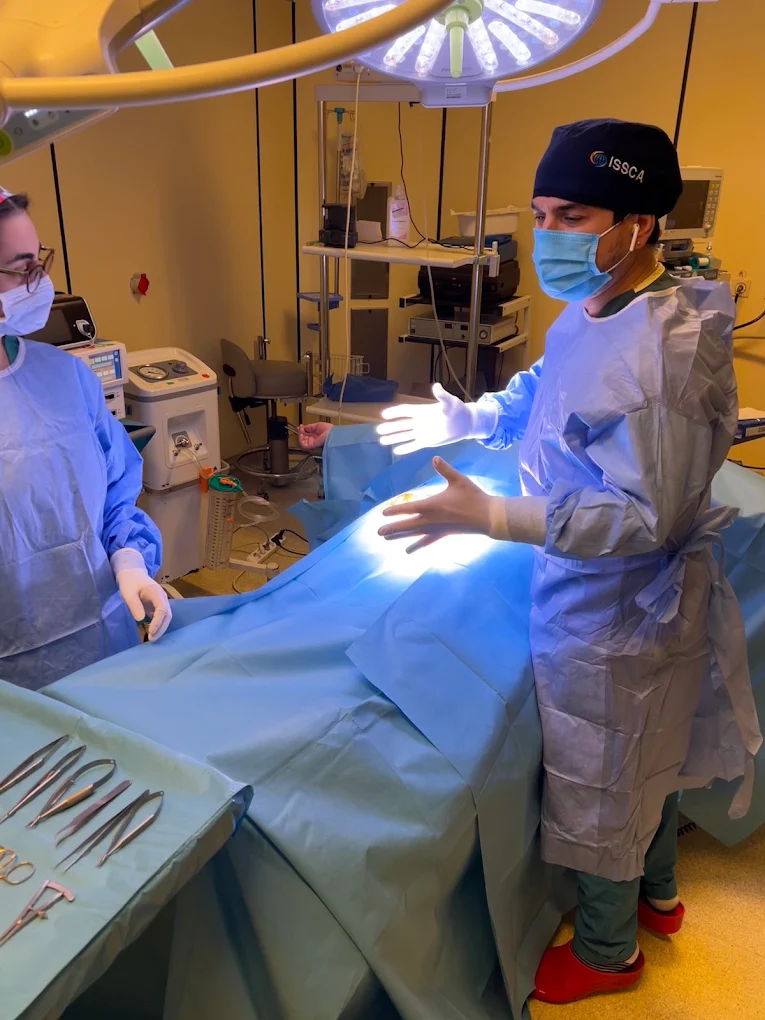
The strongest predictor of success is time since the vasectomy. Figures from the Vasectomy Study Group, the largest published series of microsurgical reversals:
Sperm return under 3 years after vasectomy (pregnancy 76%).
Belker et al., J Urol 1991
Sperm return at 3 to 8 years (pregnancy 53%).
Belker et al., J Urol 1991
Sperm return at 9 to 14 years (pregnancy 44%).
Belker et al., J Urol 1991
Sperm return at 15+ years (pregnancy 30%).
Belker et al., J Urol 1991
Pregnancy rates also depend on the partner's age and fertility, so both partners are assessed before surgery.
The choice between the two is made during the operation, once fluid from the testicular side is examined under the microscope. A surgeon who cannot perform both should not be doing reversals.

Rejoining the Two Cut Ends of the Vas Deferens
When the fluid contains sperm, the blockage is only at the vasectomy site. The scarred ends are trimmed and rejoined under high magnification with sutures finer than a hair.
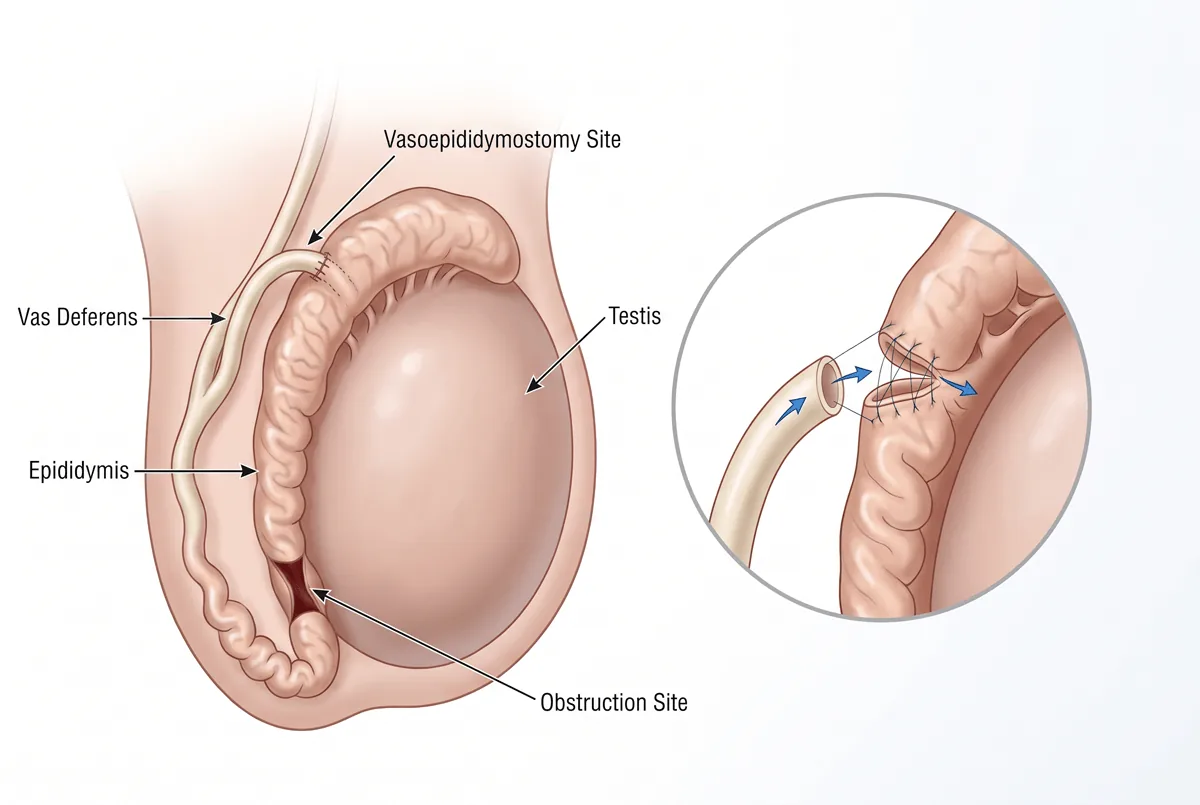
Bypassing a Second Blockage in the Epididymis
Years of pressure can cause a second blockage in the epididymis. If the fluid contains no sperm, the vas is connected directly to an epididymal tubule above the blockage, one of the most demanding operations in microsurgery.
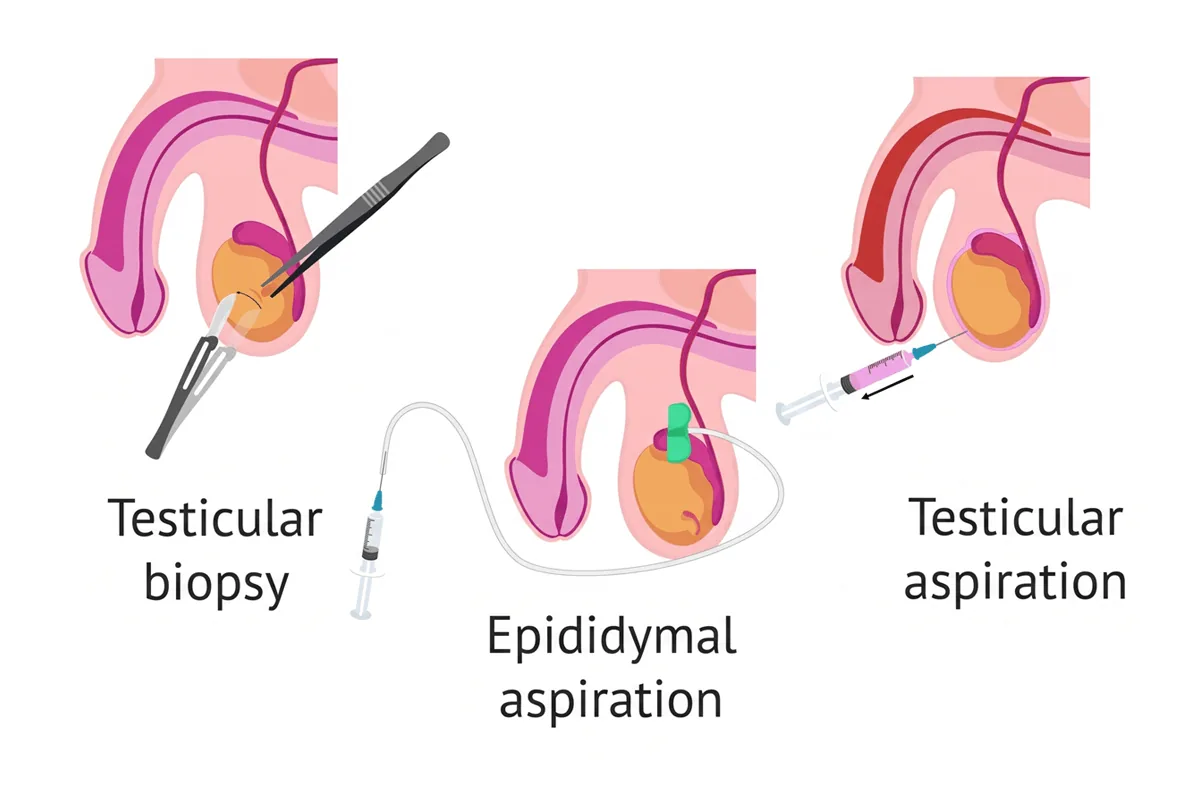
When Reversal Is Not the Right First Step
Sperm is taken directly from the epididymis or testicle (PESA, MESA or TESE) for IVF with ICSI. It skips the reversal, but every future pregnancy needs another IVF cycle.
See male infertility treatment for TESE, micro-TESE and MESA.
Move the slider to see published results for men with the same interval since their vasectomy.
Success Estimator
A strong position. Most men at this interval need only a vasovasostomy.
Figures for first microsurgical reversals from the Vasectomy Study Group (Belker et al., J Urol 1991). Educational only; your own outlook is assessed at consultation.
How the process runs for most men:
Bruising and swelling are expected; haematoma or infection are uncommon. The join can narrow again later, so sperm found during surgery can be frozen as a back-up.
Reversal results depend on the surgeon's hands and microscope, and Istanbul offers experienced microsurgeons at a realistic private cost.
Many reversals fail because the surgeon only offers the simpler vasovasostomy. Assoc. Prof. Dr. Tuncay Taş performs both and decides on each side during surgery, so a second blockage is never left unaddressed.
All-inclusive prices at Dr. Tas Clinic versus typical private fees abroad. Figures are illustrative, from public clinic pricing; your exact cost is confirmed after consultation.
| Procedure | Dr. Tuncay Taş Istanbul, Turkey | United Kingdom | United States | Europe |
|---|---|---|---|---|
| Reversal: Vasovasostomy Rejoins the cut tubes to restore fertility | $5,000 to $6,500 | £4,000 to £6,000 | $8,000 to $15,000 | €4,000 to €7,000 |
| Reversal: Vasoepididymostomy Bypasses a second blockage to restore fertility | $6,500 to $8,000 | £5,500 to £8,000 | $12,000 to $20,000 | €5,500 to €9,000 |
| Sperm Freezing Back-up sperm stored during a reversal | On request | £400 to £800 | $1,000 to $2,000 | €300 to €700 |
| Vasectomy (Not a Reversal) Cuts and seals the tubes for permanent contraception | $1,000 to $1,500 | £500 to £1,000 | $500 to $3,000 | €400 to €900 |
A vasectomy and a reversal do opposite jobs: a vasectomy blocks the tubes, a reversal reopens them. A vasectomy costs less, but it is not a cheaper way to restore fertility.
Thinking about a vasectomy rather than reversing one? It is a short, low-risk operation, but should be treated as permanent.
If you might want children in future, consider sperm freezing first; it is far simpler than a reversal later. Request a free consultation to discuss it.
It depends mainly on time since the vasectomy: sperm return in about 97% of men reversed within three years, falling to around 71% after fifteen years. Pregnancy rates are lower, as they also depend on the partner's fertility.
Most men stay five to seven days: surgery, a few days' rest and a wound check before flying home. Follow-up semen analysis can be done at home and reviewed remotely.
There is no fixed cut-off. Success falls gradually with time, and men reversed many years later are more likely to need a vasoepididymostomy, so the surgeon must be ready to perform one.
Sex can usually resume after about three weeks. Sperm typically return within two to three months after a vasovasostomy, or six to twelve months after a vasoepididymostomy. Pregnancy most often occurs within the first one to two years.
Sperm can still be retrieved directly from the epididymis or testicle (PESA, MESA or TESE) and used with IVF/ICSI. Freezing sperm found during the reversal operation itself keeps this option open without a second procedure.
There is no pain during surgery, which is done under anaesthesia. Afterwards expect a few days of aching, controlled with simple painkillers and scrotal support. Desk work is usually possible within a week.
 Medically reviewed by Assoc. Prof. Dr. Tuncay Taş