Shockwave therapy is the only erectile dysfunction treatment on the market that aims to repair the problem rather than work around it, and Turkey has become one of the main places men travel to receive it. Both of those statements are true, and neither of them tells you whether it will work for you. The honest position is set out plainly in the European guidelines: low intensity shockwave treatment produces a mild improvement in erectile function in men with vasculogenic ED, it carries a weak recommendation, and the American guideline still classes it as investigational. This guide sets out what the evidence actually shows, who benefits, what a course in Istanbul involves, and when a different treatment is the better answer.
What Shockwave Therapy Actually Does
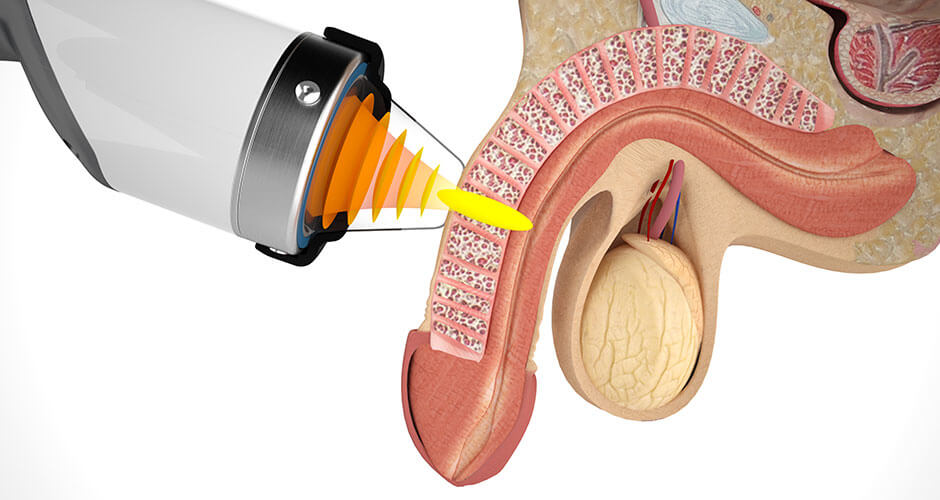
Low intensity extracorporeal shockwave therapy, written as Li-ESWT or LI-SWT, delivers acoustic pulses through the shaft and crura of the penis at roughly a tenth of the energy used to break up kidney stones. The pulses cause micro-trauma at a cellular level, and the repair response that follows is the point of the treatment: release of growth factors, recruitment of progenitor cells, and formation of new small blood vessels in the erectile tissue. The aim is better arterial inflow, not a stronger signal to an already failing artery.
That distinction is what separates it from everything else on the shelf. Tablets, injections and vacuum devices all produce an erection on demand and stop working the moment you stop using them, which is why shockwaves sit in a category of their own within the wider range of erectile dysfunction treatment. The European Association of Urology puts the difference in unusually direct language:
“The use of LI-SWT has been increasingly proposed as a treatment for vasculogenic ED over the last decade, and it’s the only currently marketed treatment that might offer a cure, which is the most desired outcome for most men suffering from ED.”
European Association of Urology, Sexual and Reproductive Health Guidelines
Read that carefully. Might offer a cure. The sentence describes an ambition supported by a mechanism, not a result you should expect to be handed. What the same guideline says about measured outcomes is considerably more restrained, and the two statements need to be read together.
What the Evidence Shows
The strongest summary of the trial data is the Cochrane systematic review of low intensity shockwave therapy for erectile dysfunction, updated in 2025. Pooling fifteen randomised trials covering 937 men, it found erectile function scores improved by a mean difference of 3.89 points on the IIEF-EF scale at short term follow up (95% confidence interval 2.89 to 4.89). Five trials with 276 men followed up over the longer term and found a mean difference of 5.25 points (95% confidence interval 2.47 to 8.04). Every one of those estimates was rated low certainty evidence.
The reviewers were careful about what that means for the man in the chair:
“LiSWT may have a small effect on erectile function in the short term, although it may not be perceived to be clinically important by men with erectile dysfunction.”
Ergun O, et al. Cochrane Database of Systematic Reviews, 2025
The EAU reaches the same place from a different direction. Its evidence summary carries a level of evidence 1a, the highest available, for the statement that low-intensity shockwave therapy can induce a mild improvement in EF among patients with vasculogenic ED
. On how many men actually notice the difference, the guideline text is specific: most studies have suggested that LI-SWT can significantly increase IIEF and EHS scores in patients with mild vasculogenic ED, although this improvement appears modest and the rates of patients reporting a satisfactory improvement range between 40-80%
.
A 40 to 80% range is wide because the trials are not comparable. Devices differ, energy settings differ, session counts differ, and the men enrolled differ. Which brings us to the single most important technical point on this page.
Focal or Radial: The Difference That Decides the Result
There are two kinds of machine sold as shockwave therapy, and they are not interchangeable. Focal shockwave devices generate a true shockwave that converges on a target depth inside the tissue. Radial devices generate a pressure wave that spreads out from the applicator head and loses energy with depth. Radial machines are cheaper, and they are widely used in physiotherapy for tendon problems.
The EAU records what happened when radial waves were tested properly for ED:
“A RCT using radial wave therapy showed no difference in IIEF-EF and EHS score between treatment and placebo groups.”
European Association of Urology, Sexual and Reproductive Health Guidelines
The same section notes that most trials have been conducted with generators delivering focal shockwaves
, and that on energy settings no significant differences were observed between various energy flux density levels; although, a 0.10mJ/mm2 seems to perform slightly better than lower energies
.
The practical consequence for anyone comparing clinics, in Turkey or anywhere else, is simple. Ask which type of device will be used and what energy flux density is set. A course delivered on a radial machine is not the treatment the evidence above describes, whatever the price.
Who It Is For
Shockwave therapy is not a general treatment for erectile dysfunction. It is a treatment for a specific cause of it. The EAU recommendation names the three groups, and the strength attached to it is Weak:
“Use low intensity shockwave treatment with/without PDE5Is in patients: with mild vasculogenic ED; as an alternative therapy in well-informed patients who do not wish to have or are not suitable for oral vasoactive therapy; who are vasculogenic ED patients that are poor responders to PDE5Is.”
European Association of Urology, Sexual and Reproductive Health Guidelines
Vasculogenic means the problem is arterial inflow. If your erectile dysfunction is driven by nerve damage after radical prostatectomy, by severe long standing diabetes with advanced tissue fibrosis, by low testosterone, or by anxiety and relationship factors, shockwaves are treating something that is not the cause. The same applies to a complaint that is often confused with ED in the first consultation: if the difficulty is timing rather than rigidity, it is premature ejaculation that needs treating, and shockwave therapy does nothing for it. The guideline does allow that men with more severe disease may still gain something: data suggest Li-SWT could ameliorate erection quality even in patients with severe ED who are either PDE5Is non-responders or inadequate responders, thus reducing the immediate need for more invasive treatments
. That is a reasonable thing to try before surgery. It is not a reason to expect surgery to become unnecessary.
This is why the assessment before treatment matters more than the treatment. A penile duplex ultrasound measures arterial inflow directly and separates men whose arteries respond from men whose arteries are the wrong target. Booking a course of shockwaves without that measurement is buying a treatment for a diagnosis nobody has made.
- Good candidate: mild to moderate vasculogenic ED, tablets working partially or not at all, arterial inflow reduced but present on duplex.
- Reasonable to try: PDE5 inhibitor poor responder wanting to exhaust conservative options before considering surgery.
- Poor candidate: ED driven by nerve injury, severe fibrosis, hormonal deficiency, or psychological factors.
- Not the right treatment: complete absence of erections with no response to injections, where penile implant surgery is the option with the evidence behind it.
The Two Guidelines Disagree, and You Should Know That
European and American urology do not take the same view of this treatment, and any clinic presenting it as settled medicine is not describing the field accurately.
The EAU recommends it, weakly, for the three groups quoted above. The American Urological Association takes a firmer line in its own ED guideline:
“For men with ED, low-intensity extracorporeal shock wave therapy (ESWT) should be considered investigational.”
American Urological Association, Erectile Dysfunction: AUA Guideline
That statement carries a Conditional Recommendation with Evidence Level Grade C, and it sits alongside the same classification for stem cell therapy.
Both positions are defensible from the same evidence, because the evidence shows a real but small effect with low certainty. Where you land depends on how much weight you give a modest average gain in a treatment with an excellent safety record. What is not defensible is presenting shockwave therapy as an established cure, and that framing is common in medical tourism marketing.
Safety and Side Effects
This is the part of the picture that is genuinely reassuring. Shockwave therapy involves no needles, no drugs, no anaesthetic and no recovery period. The Cochrane review found that, compared with sham treatment, Li-ESWT may have little to no effect on treatment-related adverse events
in both the short and long term.
In practice men describe a tapping or pulsing sensation during the session, sometimes mildly uncomfortable but rarely painful, and go back to normal activity immediately including sexual activity. There is no catheter, no dressing and no restriction on driving or flying. The realistic downside of shockwave therapy is not harm. It is spending money and several weeks on a treatment that may not change enough to matter to you.
What a Course Involves
Protocols vary between centres because the trials themselves varied. A typical course runs over four to six weeks with one or two sessions a week, each session lasting roughly fifteen to twenty minutes and delivering several thousand pulses across the shaft and both crura. No anaesthetic is needed. Some protocols repeat a second block after a pause.
The timing of any benefit is the detail most often left out of the sales conversation, and the EAU is explicit about it:
“Treatment effect appears to be clinically evident starting from one to three months after treatment completion, with a subsequent progressive decrease of the achieved EF benefit over time, although some effects could be still detected up to five years after treatment.”
European Association of Urology, Sexual and Reproductive Health Guidelines
Three things follow from that sentence. You will not know whether the course worked on the day it finishes. If something changes, it changes gradually over the following one to three months. And whatever you gain tends to fade, which is why repeat courses are discussed rather than treated as failure. Anyone promising an immediate result is describing a different treatment.
The guideline also notes that results improve when the treatment is not used alone: Data from RCTs suggest that even better results could be achieved by combining LI-SWT with other treatments such as a VED in men with T2DM or daily tadalafil.
A course paired with daily low dose tadalafil is a more evidence-based plan than shockwaves in isolation.
Shockwave Therapy in Turkey
Turkey, and Istanbul in particular, has become a significant destination for men seeking specialist erectile dysfunction care, especially those who have exhausted first line options at home. The reasons are the same ones that drive the rest of the country's medical travel: internationally trained urologists, accredited hospital facilities, and costs well below Western Europe and North America.
For shockwave therapy specifically there is a practical advantage beyond price. A course is not a single appointment, so a treatment that requires six to twelve visits fits a trip better when the visits can be compressed into consecutive weeks rather than spread across months of local appointments.
There is also a structural point worth making. Shockwave therapy is often sold as a standalone service by clinics that offer nothing else, which creates an obvious problem: a centre with one treatment will find a reason to recommend it. Assessment by an andrologist who also performs implant surgery and manages the full range of erectile dysfunction treatment produces a different conversation, because the honest answer that shockwaves are the wrong treatment for your cause of ED is available to them.
Questions to Ask Before You Book
- Is the device focal or radial? The evidence quoted above comes almost entirely from focal machines, and a randomised trial of radial waves found no difference from placebo.
- Will a penile duplex ultrasound be performed first? Without it, nobody has confirmed the treatment matches the cause.
- How many sessions, at what energy flux density? A course should be defined before you pay, and 0.10mJ/mm² is the setting the guideline singles out.
- What happens if it does not work? A clinic that can move you to injections or an implant is planning for the likely range of outcomes rather than one of them.
- Who reviews the result, and when? Because the effect appears one to three months after the course ends, follow up needs to be scheduled after you have flown home.
How It Compares With the Alternatives
| Treatment | What it does | Guideline position |
|---|---|---|
| PDE5 inhibitors | Produces an erection on demand, requires intact nerve signalling | First line, strong recommendation |
| Shockwave therapy | Aims to improve arterial inflow, effect builds over one to three months | Weak recommendation, EAU; investigational, AUA |
| Intracavernosal injections | Reliable erection independent of nerve signalling, used before each occasion | Strong recommendation, high dropout rates |
| Vacuum erection device | Draws blood in mechanically, held with a constriction ring | Weak recommendation, non-invasive and drug free |
| Penile implant | Replaces erectile function surgically, permanent and irreversible | Highest satisfaction rates of any ED treatment |
Read down that table and the sensible place for shockwave therapy becomes clear. It sits early, it is worth trying when the cause is arterial and the disease is not advanced, and it costs you nothing but time and money if it fails. It does not replace the treatments below it in the list, and choosing it should not delay a decision that has already become obvious. Where erections have gone entirely and injections no longer help, penile implant surgery is the treatment with the highest satisfaction rates in erectile dysfunction medicine.
Frequently Asked Questions
Does shockwave therapy for ED actually work?
It produces a real but modest improvement in the right patients. The 2025 Cochrane review pooled fifteen randomised trials in 937 men and found erectile function scores improved by a mean of 3.89 points on the IIEF-EF scale, rated low certainty evidence, with the reviewers noting the effect may not be perceived as clinically important by men themselves. The EAU puts the proportion reporting a satisfactory improvement between 40 and 80%. It works best in mild vasculogenic ED and is not a treatment for nerve related or psychological ED.
How long does the effect last?
The EAU states that the effect becomes clinically evident one to three months after the course finishes, then progressively decreases over time, although some effect has still been detected up to five years afterwards. Fading is expected rather than a sign that the treatment failed, and repeat courses are a normal part of the plan.
Is shockwave therapy painful, and is there any recovery time?
No anaesthetic is required and most men describe a tapping sensation rather than pain. There is no recovery period and normal activity, including sexual activity, continues immediately. The Cochrane review found little to no difference in treatment related adverse events compared with sham treatment.
Why do American and European guidelines disagree?
Because the same evidence supports two reasonable readings. The AUA states that low-intensity extracorporeal shock wave therapy should be considered investigational, a Conditional Recommendation at Evidence Level Grade C. The EAU issues a weak recommendation for three specific patient groups. The difference reflects how much weight each body gives a small average benefit backed by low certainty evidence in a treatment with a strong safety record.
Can shockwave therapy replace a penile implant?
Not in men who have already failed tablets and injections. Shockwave therapy may improve erection quality in some poor responders and can reduce the immediate need for more invasive treatment, which makes it worth trying first. Where erections are absent and injections no longer work, the implant remains the option with the highest satisfaction rates in erectile dysfunction medicine.
Does it matter which machine the clinic uses?
Yes, more than any other variable you can check. Almost all of the supporting trials used focal shockwave generators. A randomised trial of radial wave therapy found no difference in IIEF-EF or EHS scores between the treated and placebo groups. Ask which type of device is used before booking.
Sources
- European Association of Urology. Sexual and Reproductive Health Guidelines, Management of Erectile Dysfunction, section 5.6.8 Innovative treatment modalities and the recommendations table.
- American Urological Association. Erectile Dysfunction: AUA Guideline, statement on low-intensity extracorporeal shock wave therapy (Conditional Recommendation; Evidence Level Grade C).
- Ergun O, et al. Low-intensity shockwave therapy for erectile dysfunction. Cochrane Database of Systematic Reviews. 2025.
This article is general information and is not a substitute for a personal medical assessment. The figures above describe study populations rather than any individual result, and whether shockwave therapy suits you depends on the cause and severity of your erectile dysfunction.
Not sure shockwave therapy is the right treatment for you?
Schedule a confidential consultation with Assoc. Prof. Tuncay Taş for an assessment that establishes the cause of your erectile dysfunction first, then matches the treatment to it. International patient coordinators arrange travel, scheduling and remote follow up.