For most men, injections come first and the implant comes later. Intracavernosal injection therapy works quickly, needs no operation, and can be stopped at any time, which is exactly why guidelines place it ahead of surgery. So the honest question is not which treatment is stronger, but how long each one keeps working. That is where the two part company. Injections succeed in more than 70% of men who try them, yet published dropout rates run between 41% and 68%, with most men stopping in the first few months. A penile implant asks for one operation and gives back the highest satisfaction figures in erectile dysfunction medicine: the European Association of Urology states that prosthesis implantation has one of the highest satisfaction rates (92-100% in patients and 91-95% in partners) among the treatment options for ED, with appropriate counselling
. This guide compares the two on the measures that actually decide the outcome.
How Penile Injections Work
Intracavernosal injection therapy, usually shortened to ICI, means injecting a small dose of medication directly into the side of the penis with a very fine needle. The drug relaxes the smooth muscle inside the erectile bodies, blood flows in, and an erection follows within five to twenty minutes. Alprostadil is the standard single agent. Where alprostadil alone is not enough or causes too much discomfort, combinations known as bimix and trimix add papaverine and phentolamine to lower the dose of each drug.
The appeal is obvious. There is no surgery, nothing permanent, and the response does not depend on nerve function the way tablets do, which is why injections often work for men who have had prostate surgery or who have long standing diabetes. Both the European and American guidelines recommend ICI as second line therapy for exactly this reason: it is effective, it is reversible, and it can be tried before anything irreversible is considered.
The cost of that flexibility is that every erection has to be earned again. The medication is mixed or drawn up, the injection is given, and a delay follows before intercourse. Roughly half of men using alprostadil report penile pain or aching at some point, prolonged erection occurs in around 1%, and long term use carries a small risk of scar tissue forming at the injection sites. None of these is dramatic on its own. Together they explain the number that matters most.
The Dropout Problem
Injection therapy has an unusual pattern in medicine: it works, and men stop using it anyway. Published series report discontinuation rates between 41% and 68%, and the majority of those men stop within the first two to three months rather than after years of use. The reasons given are consistent and have little to do with efficacy. Men cite the loss of spontaneity, dislike of the needle, penile ache after the injection, partner reluctance, the cost of repeat doses, and the sense that the erection belongs to the drug rather than to them.
This is the single most important number in the comparison, because it reframes the question. A treatment used by a third of the men who started it is not really a long term treatment. If injections are working for you and you are content with the routine, there is no argument for changing. If you have already drifted away from them, the dropout data says you are the rule, not the exception.
How a Penile Implant Works
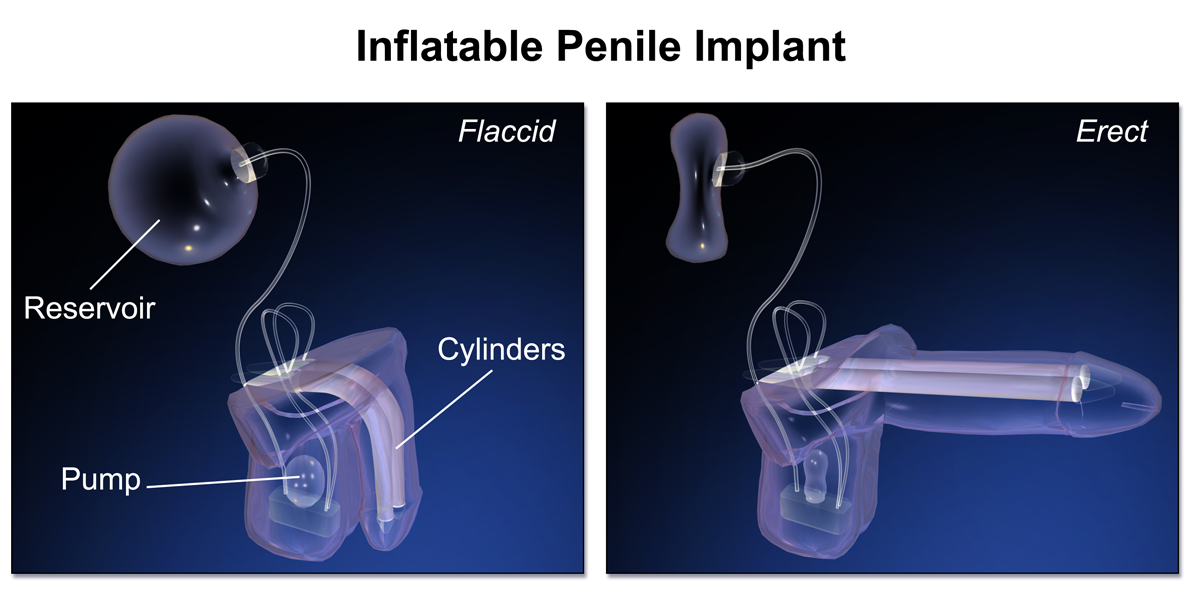
A penile implant is a device placed entirely inside the penis during a single operation. Nothing is visible from the outside. A three piece inflatable system uses two cylinders in the erectile bodies, a small pump concealed in the scrotum, and a fluid reservoir behind the abdominal wall. Squeezing the pump moves fluid into the cylinders and produces a firm erection; a release valve returns the penis to a soft, natural state afterwards. Malleable implants use two bendable rods and no pump at all.
Inflatable devices dominate because they behave most like normal anatomy, holding more than 80% of the United States market. Goodstein and Jenkins, writing in the International Journal of Impotence Research in 2023, call them the gold standard in advanced economy countries
while noting they require reservoir placement and manual dexterity, which can be limiting to some patients
. Malleable devices remain the better answer for men with poor hand strength.
The trade off is real and should be stated plainly. Implant surgery remodels the erectile tissue inside the penis, so natural erections and injection therapy are no longer possible afterwards. This is why guidelines place it third, after tablets and injections. It is also why the satisfaction figures are so high: by the time men reach it, they have tried the alternatives and know what they are choosing.
Penile Implant vs Injections at a Glance
The table below sets the two treatments side by side on the points patients raise most often in consultation.
| What matters to you | InjectionsIntracavernosal, ICI | Penile implantInflatable or malleable |
|---|---|---|
| How it works | Medication injected before each occasion | Concealed device activated by a hidden pump |
| Effectiveness | Over 70% respond to alprostadil | 92 to 100% patient satisfaction |
| Preparation before sex | Five to twenty minutes, every time | None, ready whenever you choose |
| How long it lasts | One erection per injection | 76.8% of devices still working at ten years |
| Still using it long term | 32 to 59% continue | Continuous use once healed |
| Reversible | Yes, stop at any time | No, erectile tissue is remodelled |
| Ongoing cost | Every dose, indefinitely | One operation |
| Guideline position | Second line therapy | Third line therapy |
Risks and Side Effects Compared
Both treatments carry risk, but the risks arrive at different times. With injections the burden is small, frequent, and spread across years. With an implant it is concentrated into one operation and one recovery, after which very little is expected to happen.
| Complication | InjectionsPer dose or cumulative | Penile implantSurgical or device related |
|---|---|---|
| Pain | Around half report penile ache | Soreness for one to two weeks after surgery |
| Prolonged erection | Roughly 1%, needs urgent care | Not applicable |
| Scar tissue | Small risk at injection sites over years | Not applicable |
| Infection | Uncommon | 2 to 3%, falling to 1 to 2% with coated devices |
| Mechanical wear | Not applicable | 87.2% working at five years |
| Bruising | Common, settles quickly | Expected in the first weeks |
Cost Over Time
Comparing a recurring cost with a one time cost only makes sense once you fix the frequency. Injections are priced per dose, so the total keeps climbing for as long as the treatment continues. At twice a week that is more than 100 injections a year, and more than 1,000 across a decade, plus the needles, the storage, and the repeat prescriptions behind them. An implant is a single operation with a single price, after which sexual activity costs nothing.
There is a crossover point where the running total for injections overtakes the one time cost of surgery, and where it falls depends entirely on how often you have sex and what you pay per dose. Two things are worth saying about it honestly. The first is that men who stop injections early never reach that point, which is a saving on paper and a failed treatment in practice. The second is that the implant only makes financial sense if it is the right clinical choice; cost should confirm the decision, not drive it.
What About Size?
Men frequently expect one of these treatments to change length or girth. Neither is designed to. An injected erection reflects the natural capacity of your own tissue, and an implant is sized to the erectile bodies the surgeon measures during the operation, so most men see the erect dimensions they had when erections were reliable. Some men notice a small loss of flaccid length after implant surgery, and a period of daily stretching in the first months helps to limit it.
If size is the goal in its own right rather than firmness, that is a different operation with different techniques and expectations, covered on our penile enlargement page. It is worth separating the two questions early, because a treatment chosen for the wrong reason disappoints even when it works exactly as intended.
Choosing the Device If You Move to an Implant
If the decision goes toward surgery, the next question is which system. Three well established three piece platforms lead the field, and the guidelines are clear that none of them beats the others on paper. The European Association of Urology notes that there are currently no head-to-head studies comparing the different manufacturers' implants or demonstrating superiority of one implant type over another
. The device is matched to your anatomy, your history of previous surgery, and your priorities.
- AMS 700, Boston Scientific. The longest safety record on the market, with InhibiZone antibiotic coating. Suits men who want the most proven device.
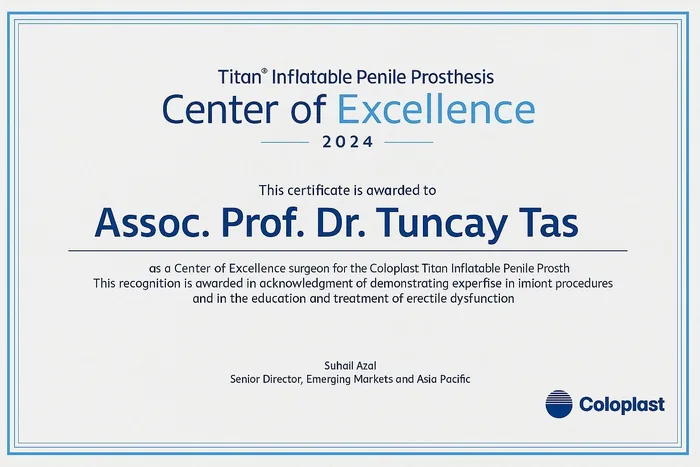
- Titan, Coloplast. Bioflex cylinders and a one touch release, giving the softest flaccid state of the three.
- Rigicon Infla10. InfiniSize girth adjustment fine tuned during surgery, useful where girth or a revision case is the priority.
All three are implanted by the same surgeon at our Istanbul centre, so the platform is chosen for your anatomy rather than for a brand. The largest analysis published to date, by Foss and colleagues in Translational Andrology and Urology in 2024 covering 11,026 implant patients, found a median device survival of 18.2 years, with 70.6% of devices still in place at ten years.
Which Should You Choose?
The two treatments answer different questions, and the right one depends on where you are in the sequence rather than on which has better numbers.
- Stay with injections if they still produce a reliable erection, the routine does not trouble you, and you would rather keep every option open. Nothing is lost by continuing, and an implant remains available later.
- Consider an implant if injections have stopped working, if the pain or the preparation has quietly ended your sex life, or if you have already drifted away from them without deciding to.
- Consider an implant sooner if you have severe Peyronie's disease, extensive corporal fibrosis, or erectile dysfunction after radical prostatectomy that has not responded to second line treatment, where the response to injections is often poor from the start.
- Discuss both openly. The American Urological Association is explicit that surgery belongs in the conversation early, stating in Statement 18 of its Erectile Dysfunction guideline that
men with ED should be informed regarding the treatment option of penile prosthesis implantation, including discussion of benefits and risks/burdens
.
Frequently Asked Questions
Are penile injections better than an implant?
Neither is better in the abstract. Injections are less invasive, fully reversible, and effective in more than 70% of men, which is why guidelines recommend trying them first. An implant produces higher satisfaction, between 92 and 100% for patients and 91 to 95% for partners, and needs no preparation before sex, but it is permanent. The better treatment is the one you will still be using in five years.
How long do penile injections keep working?
The medication itself does not usually lose its effect, but most men stop using it. Published discontinuation rates run between 41% and 68%, and the majority of those men stop within the first two to three months. The reasons given are the needle, the loss of spontaneity, penile ache and the recurring cost, rather than the injections failing to produce an erection.
Can I still have an implant after years of injections?
Yes. Previous injection therapy does not prevent implant surgery, and most implant patients have used injections at some point. Long term injection use can leave scar tissue at the injection sites, which the surgeon assesses before the operation and manages during it. Tell your surgeon how long you injected and how often, because it helps with sizing and planning.
Does an implant feel different from an injected erection?
The erection is firm and reliable rather than dependent on blood flow, so many men describe it as more predictable. Sensation, orgasm and ejaculation are unaffected, because the implant sits inside the erectile bodies and does not touch the nerves responsible for feeling. The main difference most men notice is control: firmness begins and ends when you decide, not when the drug allows.
Which costs less over time?
It depends on frequency. Injections cost less to start and keep costing for as long as you use them; at twice a week that is over 100 doses a year. An implant is one operation with one price. Somewhere along the timeline the running total for injections passes the cost of surgery, and the more often you have sex the sooner that happens.
Is the implant operation reversible?
No, and this is the most important thing to understand before consenting. Placing the cylinders remodels the erectile tissue, so natural erections and injection therapy are not possible afterwards. A worn device can be replaced through the original incision in a shorter operation, but the natural mechanism does not return. This is precisely why the guidelines position it after tablets and injections.
Sources
- European Association of Urology. Sexual and Reproductive Health Guidelines, Management of Erectile Dysfunction.
- American Urological Association. Erectile Dysfunction: AUA Guideline, Statement 18 (Strong Recommendation; Evidence Level Grade C).
- Goodstein T, Jenkins LC. A narrative review on malleable and inflatable penile implants: choosing the right implant for the right patient. International Journal of Impotence Research. 2023;35(7):623–628.
- Foss HE, Prebay ZJ, Ebbott D, Buck MB, Li M, Chung PH. A global, propensity-score matched analysis of patients receiving inflatable penile prostheses. Translational Andrology and Urology. 2024;13(8):1537–1545.
- Mykoniatis I, Langas G, Tsiakaras S, Anastasiadis A, Van Renterghem K. Update on penile prosthesis. Asian Journal of Andrology. 2025;28(1):23–30.
This article is general information and is not a substitute for a personal medical assessment. The figures above describe study populations rather than any individual result.
Injections no longer working for you?
Schedule a confidential consultation with Assoc. Prof. Tuncay Taş to review what injection therapy is still giving you and whether an implant is the right next step. International patient packages include consultation, surgery, hospital stay, and follow up.