The Penuma implant is the original silicone sleeve device for permanent penile girth and flaccid length enhancement, developed by Dr. James Elist and cleared by the FDA in 2004 as a cosmetic surgical device. It sits under the skin of the shaft, above the erectile chambers, and adds size without touching erectile function. Men researching this procedure are usually weighing the Penuma implant Turkey cost against surgical fees in the United States that run two to three times higher for the same device. This guide works through what Penuma actually is, what the peer reviewed evidence on it reports, where European guidelines stand on the device class, what it costs in Istanbul against five other markets, and the specific questions that separate a durable result from a revision.
What the Penuma Device Is and Is Not
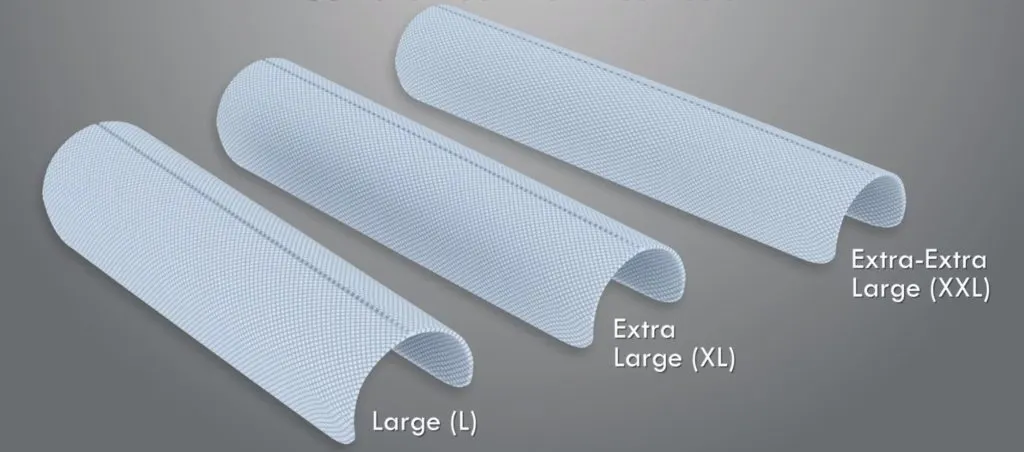
Penuma is a graded, curved silicone shell that a surgeon slides into a plane created directly beneath the penile skin. Once healing is complete, the shell becomes the new outer contour of the shaft. Nothing is injected, nothing dissolves and nothing is reabsorbed, which is the entire reason the gain is described as permanent rather than temporary.
The detail that matters most is anatomical: Penuma sits above the corpora cavernosa, the paired chambers that fill with blood to create an erection. It does not enter them, compress them or replace them. That single fact separates this operation from an inflatable penis implant in Turkey, a different device built to restore rigidity in a penis that no longer works on its own, covered in detail in the comparison of the leading inflatable models. Penuma makes a functioning penis larger. An inflatable prosthesis makes a non functioning penis hard again. Men who want the second outcome and book the first are solving the wrong problem, whatever the marketing on a clinic website implies.
A note on naming, because search results mix the terms freely: Penuma is the branded device name used in the original FDA clearance and in every published clinical study. "Silicone sleeve implant" and "subcutaneous penile implant" are the generic descriptions urologists use for the device class. Some clinics market equivalent devices under other trade names. The clinical literature referenced on this page, without exception, was collected on Penuma specifically.
How the Surgery Is Performed in Istanbul
A Penuma implant in Turkey is performed as a day case, done under general or spinal anaesthetic, and takes about an hour in an experienced surgeon's hands. A single incision is placed at the base of the penis, either in the suprapubic crease or laterally on the upper scrotum. The surgeon opens a plane between the penile skin and the underlying fascia along the full length of the shaft, seats the sized shell in that plane, checks the contour is symmetrical from every angle, and closes with buried sutures that leave the scar hidden in the pubic hairline.
Two decisions inside that description account for most of what separates a clean result from a revision. The first is correct sizing against the shaft: an oversized shell is the mechanical origin of the distal protrusion problems discussed below. The second is the incision itself, and unlike most claims in cosmetic surgery marketing, this one has a published answer rather than a surgeon's opinion.
What the Published Studies on Penuma Report
Penuma is unusual among penile enlargement devices in having an actual peer reviewed record behind it rather than testimonials alone. Three studies carry the weight of that record.
The largest is a single surgeon series of 400 consenting men, published in the Journal of Sexual Medicine in 2018, with follow up out to six years:
“In the 400 patients, the implantation of the Penuma silicone implant increased midshaft circumference from an average of 8.5 ± 1.2 cm to 13.4 ± 1.9 cm (56.7% increase; P < .001).”
Elist JJ, Valenzuela R, Hillelsohn J, et al. Journal of Sexual Medicine, 2018
At a mean of four years, 72% of men had kept a two category improvement on the study's satisfaction scale and 81% described themselves as highly or very highly satisfied. Complications recorded were seroma in 4.8% of men, scar related issues in 4.5%, infection in 3.3% and device removal in 3%. No participant reported a change in erectile function or ejaculation. The authors are explicit about the study's limits: it is retrospective, it comes from the device's inventor, and 126 additional patients declined to be included, which is why the numbers below matter more for a decision made today.
The 2024 multi institutional data in Therapeutic Advances in Urology, pooling 299 consecutive cases from four surgeons at four centres, is the closer proxy for what an independently audited outcome looks like:
“Patients experienced an average increase of 4.1 ± 1.5 cm in their flaccid penile length (a 50% increase) and an average increase of 3.4 ± 1.5 cm in their flaccid girth (a 37% increase). Complication rates included new-onset postoperative erectile dysfunction (0%), infection (1.3%), seroma (2.0%), and erosion (5.0%).”
Siegal AR, Celtik KE, Razdan S, et al. Therapeutic Advances in Urology, 2024
A third study, 92 cases from a single high volume American surgeon between 2019 and 2022, is the one worth taking into any consultation, because it isolates a variable a patient can actually control by choosing where and how the operation is done. It recorded an average girth gain of 3.1 cm and flaccid length gain of 2.5 cm, with 82% satisfied or very satisfied with appearance and 75% who said they would repeat the surgery. Then it split the results by incision:
“When assessed by surgical approach, the revision rate was significantly higher in infrapubic patients (13% vs 2%). The implant removal rate was also significantly higher when the infrapubic approach was used (21% vs 6%).”
Salkowski M, Levine LA. Therapeutic Advances in Urology, 2024
A 21% removal rate against 6% for the identical device, in the hands of the same surgeon, is a technique effect, not a device effect. It is the clearest evidence in the literature that where and how Penuma is placed matters as much as the decision to have it placed at all.
Penuma Implant Before and After: Patient Results in Istanbul
Photographs from silicone sleeve girth implant procedures performed in Istanbul by Assoc. Prof. Tuncay Taş. Hover or tap a card to reveal the image, then click to enlarge. The full penis enlargement before after archive holds a wider range of starting anatomies, and the penile implant before after gallery covers inflatable prosthesis cases separately.
Every clinical photograph on this page is shared with explicit written patient consent.

Penuma Implant Cost in Turkey vs Other Countries
The Istanbul figure below is a full package: the device, the surgeon's fee, the hospital, the anaesthetist, accommodation, airport transfers and the follow up visit before you fly home. The other rows are the surgical fee alone as typically quoted in that market, before travel, accommodation or any later revision. All figures are shown in US dollars for comparison. Whichever market you compare, the Penuma surgery cost shown here for Turkey is the only one built as an all inclusive package rather than a surgical fee alone.
| Country | Penuma implantStandard placement | With liposuctionSuprapubic contouring | Removal or revisionExplant, scar revision |
|---|---|---|---|
| TurkeyIstanbul, all inclusive | $10,000 to $11,000 | $11,500 to $13,000 | $4,000 to $6,500 |
| United StatesSurgical fee only | $22,000 to $30,000 | $26,000 to $34,000 | $9,000 to $18,000 |
| United Kingdom£16,000 to £20,000 | $20,000 to $25,000 | $24,000 to $29,000 | $9,000 to $15,000 |
| Germany€18,000 to €24,000 | $19,000 to $26,000 | $22,000 to $29,000 | $8,500 to $15,000 |
| United Arab EmiratesDubai and Abu Dhabi | $18,000 to $24,000 | $21,000 to $27,000 | $8,000 to $14,000 |
| MexicoTijuana and Guadalajara | $12,000 to $16,000 | $15,000 to $19,000 | $6,000 to $10,000 |
Look hardest at the last column. A silicone shell can need attention years after placement, and a quote that says nothing about that possibility is only half a price. The saving in Istanbul is not a discount on the implant itself, which is imported at the same manufacturer price a US or UK clinic pays. It reflects lower staff and facility costs and the scale that Turkey's health tourism sector has built, covered further below. What it cannot buy is a different surgeon, and the technique data above shows that variable dominates the outcome far more than the country the operation happens in.
The Complication Picture the Price Quote Leaves Out
Penuma is elective cosmetic surgery on a healthy organ and deserves a stricter standard of disclosure than surgery that treats disease. The honest summary from the literature is that the frequent complications are cosmetic and correctable, and the infrequent ones are serious enough to require reconstructive surgery, not a quick fix.
Erosion is the finding that has grown with more independent data rather than shrunk. The multi institutional series recorded it in 5.0% of cases, and the authors were direct about the implication:
“Complications are mainly cosmetic and may be corrected; however, patients should be appropriately counseled on the risk of erosion, which appears to be higher than previously reported.”
Siegal AR, Celtik KE, Razdan S, et al. Therapeutic Advances in Urology, 2024
A 2025 series in the Journal of Sexual Medicine approached the question from the reconstructive end, following 16 men referred to a specialist centre to have a Penuma device removed after it was placed elsewhere. Among those 16, distal protrusion and dorsal curvature each occurred in 63%, penile shortening in 50%, sensory change in 44%, localised infection in 38% and new erectile dysfunction in 32%:
“After explant, capsular contraction can result in disabling curvature and penile shortening which can be managed with scar revision. However, patients can experience varying degrees of sexual dysfunction despite surgical correction.”
Barham DW, Lee J, Ghaziyar H, Gelman J. Journal of Sexual Medicine, 2025
Read that cohort correctly: it describes men whose device had already failed and needed removal, so it is the profile of a bad outcome, not the average outcome. What it establishes is what the downside actually looks like when things go wrong, which is a reconstructive operation, not a simple reversal. Any clinic quoting a complication rate near zero is not describing a documented result, because none exists in the published record. If curvature develops from an unrelated cause, that is treated separately as penile curvature correction rather than as a device revision.
Where the European Guidelines Stand on Penuma
Any clinic presenting Penuma as established, low risk medicine is not representing the field accurately. The European Association of Urology addresses the device by name in its Sexual and Reproductive Health Guidelines, and the position is unambiguous:
“Do not use biodegradable scaffolds and subcutaneous penile implant (Penuma®) to address penile girth enhancement, as they are considered experimental.”
European Association of Urology, Sexual and Reproductive Health Guidelines, Strong recommendation
Experimental here is a statement about the size and independence of the evidence base, not a finding that the device fails. It sits alongside a separate, unrelated recommendation that is often confused with it and is worth distinguishing precisely:
“Do not use silicone, paraffin and petroleum jelly (Vaseline) to address penile girth enhancement.”
European Association of Urology, Sexual and Reproductive Health Guidelines, Strong recommendation
That warning targets injected liquid silicone, paraffin and petroleum jelly, substances that migrate through tissue, cannot be removed, and cause disfiguring granulomas. Penuma is the opposite kind of object: a single, sized, solid shell placed in a defined surgical plane and retrievable if it ever needs to come out. Conflating the two, which happens constantly in search results, leads men either to fear a safe device or to underestimate a genuinely dangerous practice. The guidelines also carry one instruction that should precede any consultation about size:
“Inquire on the presence of body dysmorphic disorder/penile dysmorphic disorder in patients with normal-sized penis complaining of short penile size.”
European Association of Urology, Sexual and Reproductive Health Guidelines, Strong recommendation
A surgeon who skips this conversation with a man of entirely normal anatomy is not doing the assessment properly, and a technically successful implant will not fix a perception problem.
Penuma Against the Other Ways to Add Girth
Four routes to a thicker penis are actually on offer, and they do not compete on the same terms. One is permanent and surgical, two are temporary and injected, and the fourth treats an entirely different condition. A wider comparison of every surgical route sits on our main penis enlargement surgery in Turkey page, alongside candidacy and recovery detail for each option.
| Option | Typical measured gain | How long it lasts | Main drawback |
|---|---|---|---|
| Penuma implant | 3.1 to 4.9 cm circumference in published series | Permanent, device remains in place | Surgical risk, erosion reported at 5.0%, revision possible |
| Hyaluronic acid filler | 1 to 2 cm circumference, volume dependent | Twelve to eighteen months, then reabsorbed | Repeat sessions, gradual loss, lumping if poorly placed |
| Autologous fat transfer | Variable, partly lost to resorption | Unpredictable, often years with shrinkage | Uneven take, contour irregularity, may need repeating |
| Inflatable penile prosthesis | Restores rigidity, adds no girth when flaccid | Permanent, mechanical lifespan of the device | Treats erectile dysfunction, wrong device for size alone |
If the goal is a measurable, permanent gain in circumference and erections already work normally, Penuma is the only row in that table that delivers a lasting result. If the real complaint is erectile function, the honest route runs through erectile dysfunction treatment in Turkey first, and the comparison of implants against injection therapy lays out what durability actually looks like once tablets stop working. Men wanting to exhaust conservative options before considering surgery often ask about shockwave therapy, a reasonable question with a carefully qualified answer.
Who Penuma Suits
- Good candidate: normal erectile function, body mass index below 35, circumcised or willing to be circumcised at the same operation, and a specific dissatisfaction with girth rather than a general dissatisfaction with the body.
- Good candidate: a man who tried filler, saw a real result, watched it fade over a year, and wants a version of that result that does not require repeating.
- Poor candidate: a significant suprapubic fat pad concealing the shaft, where the apparent length problem is anatomical and buried penis surgery treats the actual cause instead of covering it.
- Poor candidate: untreated erectile dysfunction, where added girth does nothing for an organ that still will not function, and the right conversation is about an inflatable device such as the AMS 700 or the ZSI 475.
- Not a candidate: normal anatomy paired with a distorted perception of it. The European guidelines require that penile dysmorphic disorder be screened for directly, and surgery performed in that setting reliably disappoints regardless of technical success.
- Not a candidate: active infection, uncontrolled diabetes, or an inability to commit to the full six week abstinence period during healing.
Recovery After Penuma, Week by Week
- Day 0: day case surgery of roughly one hour, discharge the same day or after one overnight stay, light dressing and a supportive garment.
- Days 1 to 4: swelling and bruising peak. Most men are back at desk work and normal daily activity around day four.
- Weeks 1 to 2: wound review before flying home. Swelling begins to settle and the contour starts to look like the result rather than the operation.
- Weeks 2 to 6: no sexual activity of any kind, including masturbation. This is the single instruction most closely tied to complications, and it is not negotiable.
- Week 6 onward: gradual return to intercourse and full exercise.
- Month 3: the settled contour. Measurements taken earlier overstate residual swelling and understate the final result.
Questions Worth Asking Before You Book in Istanbul
- Which incision do you use, suprapubic or infrapubic? This is the question with the strongest published evidence behind it, for the reasons in the Salkowski and Levine comparison above. Expect a reasoned answer, not reassurance.
- How many Penuma cases have you performed, and over what period? Ask for volume in genital and cosmetic penile surgery specifically, not aesthetic surgery generally.
- What is your own erosion and explant rate, tracked over how many patients? Not the manufacturer's figure, not the published literature's figure, the surgeon's own. A figure near zero without a tracked denominator is not a result, it is a claim.
- What does a revision cost if one is needed, and who is responsible for it? Get this in writing before surgery, not after a complication appears.
- How is follow up handled once I am home? Full healing runs to about twelve weeks, most of which you will spend outside Istanbul.
- Will size be measured before and after, and by what method? Flaccid circumference at midshaft is the measure used throughout the published literature. Any other measurement is not comparable to the figures on this page.
Frequently Asked Questions
Penuma is the original, FDA cleared device in this class, developed by Dr. James Elist, and it is the device named in every peer reviewed study cited on this page. Other clinics market comparable subcutaneous silicone sleeves under different trade names. Before comparing a quote against the figures here, confirm in writing which specific device is being used, since the clinical record belongs to Penuma and does not automatically transfer to an unrelated product.
The Penuma implant Turkey cost, as an all inclusive package in Istanbul covering the device, surgeon's fee, hospital, anaesthetist, accommodation, transfers and follow up, typically runs $10,000 to $11,000. The surgical fee alone in the United States runs $22,000 to $30,000, and in the United Kingdom £16,000 to £20,000 (roughly $20,000 to $25,000), before travel or accommodation. The saving reflects lower staff and facility costs, not a different or lower cost device.
Five to seven days, covering the surgery, immediate recovery, a wound review and a fitness check before you fly. Full healing runs to about twelve weeks and the final contour settles around month three, so remote follow up for the period after you leave Istanbul should be agreed before you travel, not after.
They are separate operations addressing separate problems, and combining them raises the infection risk on both. Where erectile dysfunction and a girth complaint coexist, the erection is treated first with a device such as the Coloplast Titan or the Rigicon Infla10, and the girth question is revisited once healing from that surgery is complete.
Early sexual activity is the most common avoidable cause of a device shifting out of position, a wound reopening or the implant working its way toward the tip. It is also the one variable that is entirely within the patient's control. Six weeks is a short price for a permanent result, and surgeons who see this complication overwhelmingly see it in men who did not wait.
Sources
- Elist JJ, Valenzuela R, Hillelsohn J, Feng T, Hosseini A. A Single-Surgeon Retrospective and Preliminary Evaluation of the Safety and Effectiveness of the Penuma Silicone Sleeve Implant for Elective Cosmetic Correction of the Flaccid Penis. Journal of Sexual Medicine, 2018;15:1216 to 1223.
- Siegal AR, Celtik KE, Razdan S, Sljivich M, Kansas B, Shah B, Levine LA, Valenzuela RJ. A multi-institutional update on surgical outcomes after penile silicone sleeve implantation. Therapeutic Advances in Urology, 2024.
- Salkowski M, Levine LA. Outcomes and patient satisfaction after Penuma silicone implant surgery via two surgical approaches. Therapeutic Advances in Urology, 2024.
- Barham DW, Lee J, Ghaziyar H, Gelman J. Complications of the Penuma penile implant for genital enhancement. Journal of Sexual Medicine, 2025.
- European Association of Urology. Sexual and Reproductive Health Guidelines, chapter on Penile Size Abnormalities and Dysmorphophobia, recommendations on penile girth enhancement and lengthening.
- USHAŞ, Republic of Türkiye International Health Services. National health tourism statistics for 2025, patient volumes and revenue.